

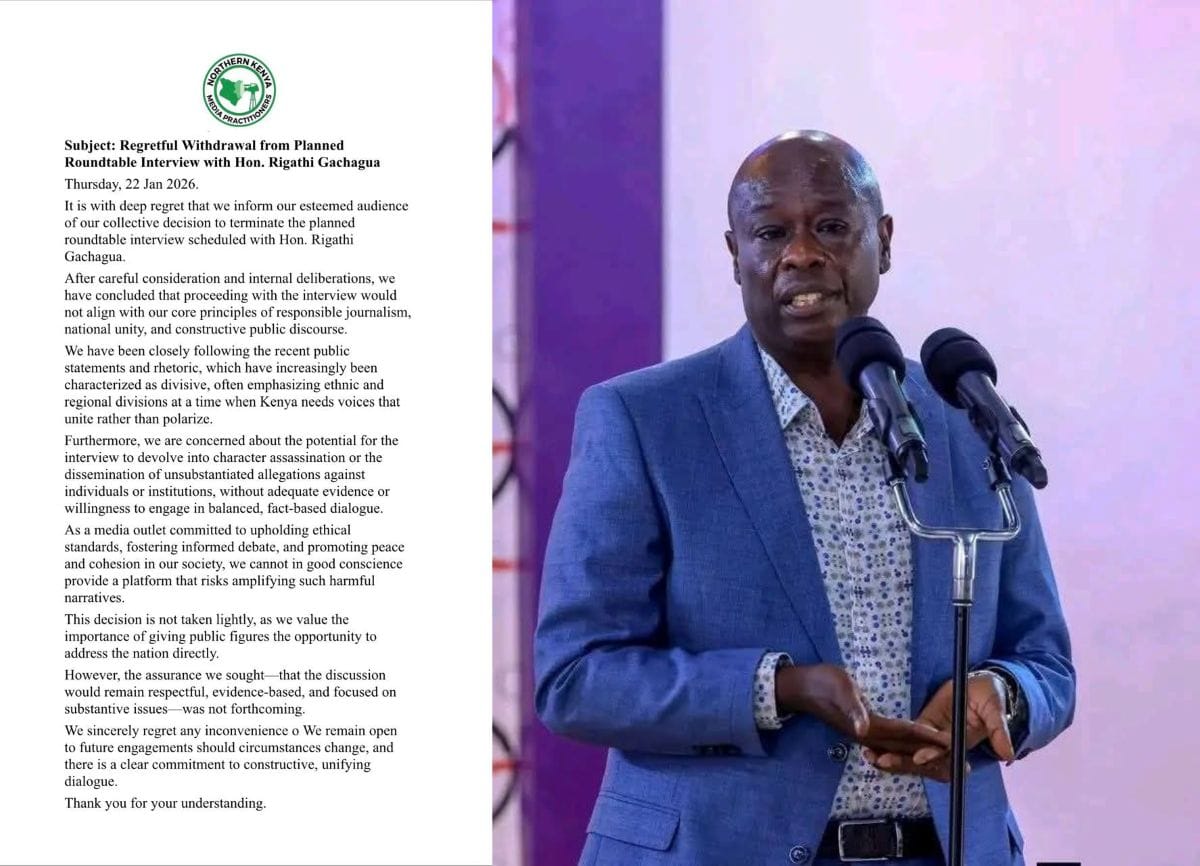
Media practitioners from northern Kenya have pulled out of a planned roundtable interview with former Deputy President Rigathi Gachagua. The group cited concerns over his recent statements as divisive and focused on ethnic divisions. This decision has sparked talks about journalism ethics and national unity in Kenya, especially as political tensions rise ahead of 2027 elections.
The boycott came in a joint statement released on January 22, 2026. In it, the journalists said they thought hard about the move. They felt going ahead would go against their values of responsible reporting and building unity.
They pointed to Gachagua’s words lately, which they say push regional divides when the country needs voices that bring people together.
They also worried the interview might turn into attacks on people or groups without facts to back them up. As outlets committed to ethics and peace, they could not risk giving air to harmful ideas. The statement noted they asked for guarantees the talk would stay respectful and based on evidence, but got none.
This group includes reporters from areas like Garissa, Mandera, Wajir, and Marsabit. They work for local radio, TV, and online spots. Nomad Voice TV confirmed its part in the boycott, saying it stands for balanced dialogue. The interview was set to happen soon, but now it is off.
Gachagua, impeached last year, has stayed active in politics. He leads the Democracy for the Citizens Party and tours central Kenya a lot. But his comments on northern leaders have drawn fire.
He once said leaders from the north should not lecture on affirmative action, pointing to devolution funds since 2013. MP Peter Salasya defended those leaders, hitting back at Gachagua over school claims.
Reactions came quick. Some on social media called the boycott cowardice, saying media should not dodge tough talks. One post said journalists do not get to pick who they cover based on comfort. Others backed the move, saying it stops spread of division. A user noted no region wants to platform primitive politics.
They quoted the full statement, highlighting the push for constructive discourse. Parrot Times added the group expressed deep regret but stood firm.
For northern Kenya, media play a big role in cohesion. The region deals with security, drought, and development gaps. Journalists there often cover stories on unity and peace. Boycotting Gachagua shows they guard their platforms carefully.
President William Ruto, who took office in 2022, has worked on national unity. His team might see this as a win, keeping divisive voices in check. But critics say media should engage all sides for balance.
The statement ended by saying the decision was not light. They value letting leaders speak, but not at cost to society. No new date for any talk, and Gachagua has not responded yet.
Some analysts say this could hurt Gachagua’s reach outside central areas. He needs broad support for any comeback. Northern voices carry weight on issues like devolution.
Media groups like the Kenya Editors Guild might weigh in soon. They push for ethical standards across the board. Past boycotts happened over similar concerns, like during election times.
For now, the roundtable stays canceled. Journalists stand by their call. It reminds public figures to watch their words.
This story unfolded fast on platforms like Facebook and Instagram. Posts shared the statement widely, getting shares and comments. In the end, northern Kenya media chose unity over one interview. Time will show if others follow suit.