


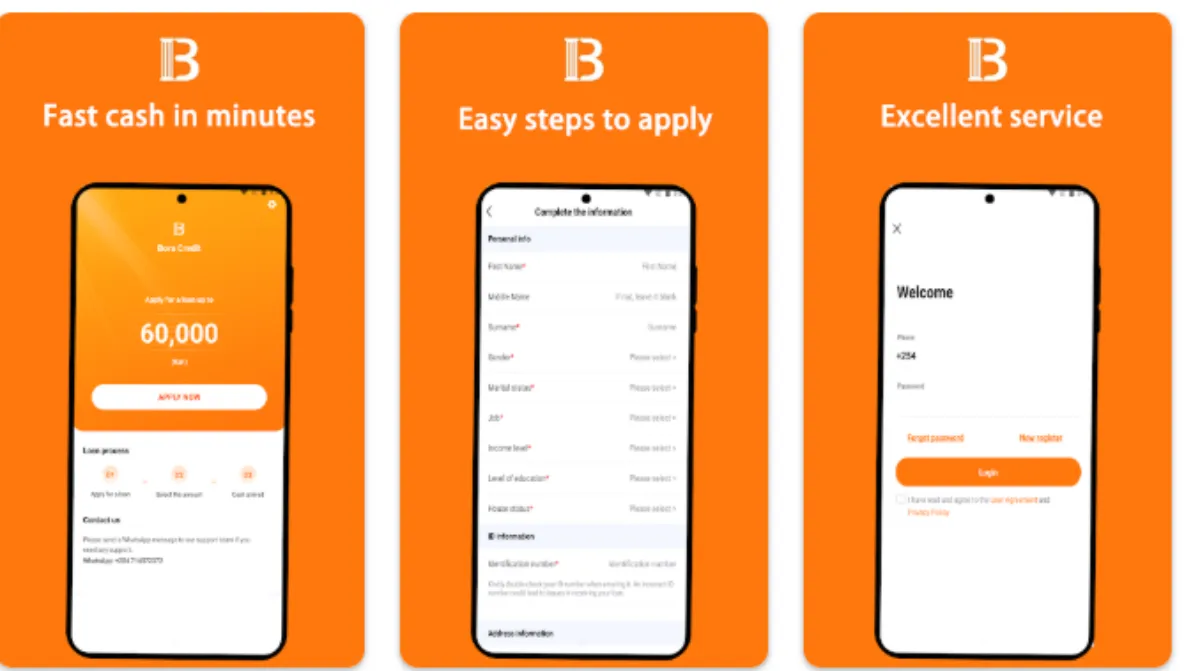
A fast-spreading Bora Credit loan scam has left hundreds of Kenyans furious after the mobile lending app lured them with promises of up to 200,000 shillings in long-term business loans, only to trick them into accepting unwanted short-term cash advances of less than 5,000 shillings at punishing interest rates. Victims say the company uses aggressive phone marketing and deliberate deception inside the app to push borrowers into debt they never meant to take.
The Bora Credit loan scam starts with an unsolicited call from smooth-talking agents who claim the borrower has been pre-approved for substantial business funding. They send a direct Play Store link and urge immediate download. Once installed and registered, the app displays a tempting credit limit of 150,000 or 200,000 shillings, but the actual amount available for withdrawal is usually between 1,500 and 4,800 shillings.
To “unlock the full business loan”, users are told to double-tap or rapidly press the apply button on a specific page. That action instantly disburses the tiny emergency loan without any further confirmation screen, trapping the user in a repayment cycle that begins almost immediately.
Within hours, victims receive nonstop calls and SMS demanding repayment plus steep daily interest that can exceed 20 per cent per week. Many only discover they have taken a loan when money appears in their M-Pesa with a congratulatory message, followed minutes later by the first repayment reminder.
“I thought I was just activating my limit,” said a Nairobi mechanic who asked to remain anonymous. “Next thing I know, 3,800 shillings lands in my phone, and they are calling me ten times a day saying I must pay 5,900 in seven days.”
Play Store reviews for Bora Credit paint a damning picture. Over 60 percent of the more than 4,000 ratings are one-star, with users repeatedly using words like “scam”, “thieves”, “trick”, and “fraud”. Several reviewers posted screenshots showing the exact double-tap instruction that triggers the unwanted loan. Others complain that customer care numbers are either switched off or agents hang up when challenged.
Regulation 14 of the 2022 CBK Digital Credit Providers Regulations requires full disclosure of loan amounts, tenure, total cost of credit, and penalties before disbursement. Intentionally hiding the true nature of the transaction and using gamified actions to trigger binding contracts clearly breaches transparency rules. The practice of disbursing funds without final user consent also contradicts the requirement for an explicit acceptance step.
The app remains live on Google Play despite the flood of complaints. Digital lenders in Kenya are supposed to be licensed by CBK, yet several victims who contacted the regulator report that Bora Credit does not appear on the official list of approved providers.
When reached for comment, a phone number listed on the app went unanswered, while the official WhatsApp business account blocked journalists attempting to ask questions.
Financial analysts warn that such predatory tactics are becoming more sophisticated as competition in the digital lending space intensifies. “They prey on people who desperately need working capital for small businesses,” explained consumer finance expert Grace Mwangi. “The promise of 200K is the bait, the double-tap is the trap, and the victim only realises when the harassment starts.”
CBK has promised tougher action against unlicensed and non-compliant lenders in 2026, including real-time monitoring of app behaviour and automatic suspension for those found using dark patterns.
For now, consumer groups are urging Kenyans to check the official CBK website for licensed lenders, avoid apps that promise huge limits on first registration, and never tap or click anything inside a loan app without reading every word. They also own Rocket Pesa under a subsidiary.
As complaints about the Bora Credit loan scam continue to pour in from Eldoret to Mombasa, one thing is clear: thousands of Kenyans have learnt the hard way that a double-tap can sometimes cost far more than they ever agreed to borrow.