
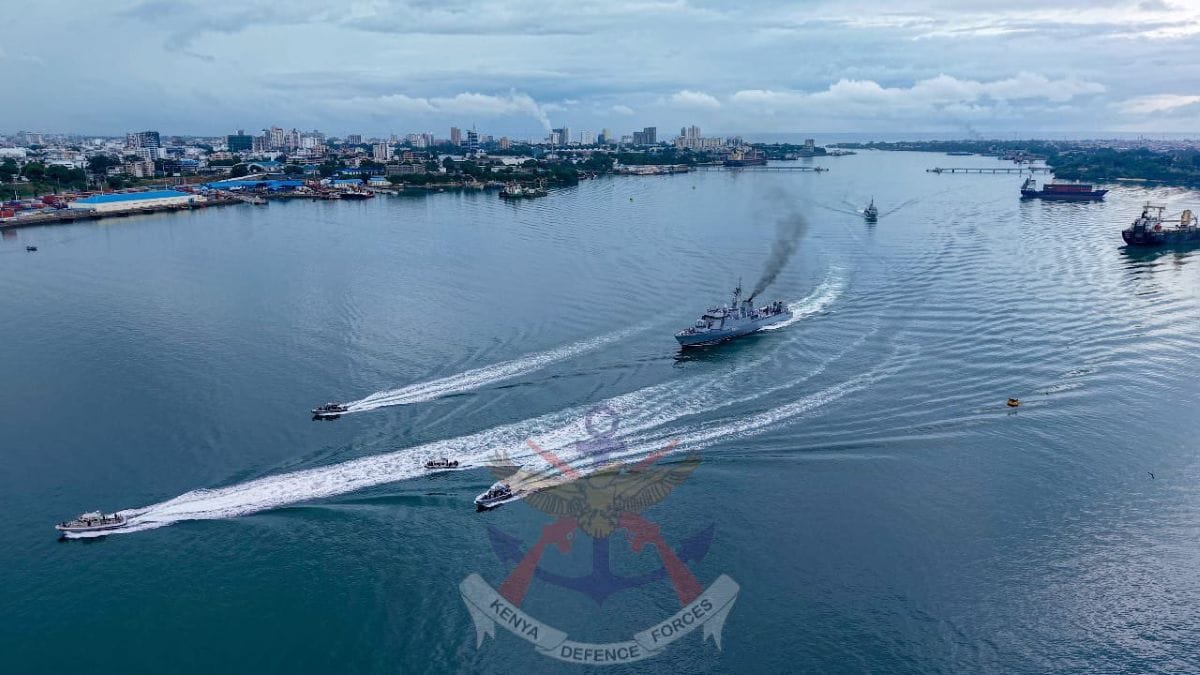
Kenya eyes navy escorts for cargo ships amid Red Sea chaos as the government floats a bold plan to protect exporters hit hard by Middle East tensions. Industry Principal Secretary Juma Mukhwana suggested pulling cargo together through the Kenyan National Chamber of Commerce and Industry and using Kenya Defence Forces vessels to guide shipments through dangerous waters.
The idea came up during talks about ongoing disruptions from conflicts involving Iran, the US, Israel, and Houthi attacks in the Red Sea. These troubles have forced many ships to take the long route around Africa, driving up costs and delaying goods.
Air freight has dropped to just 5 to 10 per cent of normal levels, putting thousands of jobs at risk. KNCCI President Eric Ruto cautioned that approximately 1,500 regular exporters are experiencing significant hardship, with some incurring weekly losses in the billions of shillings.
Mukhwana pointed out that other countries already send naval protection for their vessels in risky zones. He proposed that Kenya could do something similar, maybe escorting ships as far as safer spots like Jeddah before switching to other transport options.
The plan would see the Chamber collect consignments from businesses, then work with the government on logistics. Supporters say it shows Kenya stepping up to defend its trade interests instead of waiting for bigger powers to fix the mess.
Critics, however, question whether the Kenya Navy is equipped for such missions. The Persian Gulf and areas near the Strait of Hormuz carry real dangers from missiles and drones.
Some online comments poked fun at the suggestion, joking that ballistic missiles cannot be stopped by KDF helmets. Others wondered if Kenya should risk its limited naval resources far from home waters when local security challenges already stretch the forces thin.
The disruptions started intensifying last year when Houthi rebels began targeting ships linked to Israel or its allies. Many shipping lines rerouted around the Cape of Good Hope, adding weeks to journeys and raising insurance costs.
Kenyan exporters of tea, flowers, avocados, and meat have taken heavy hits. Perishable goods spoil faster on longer routes, leading to rejected shipments and lost income. Factories that rely on imported raw materials also face delays, threatening production lines.
Mukhwana stressed the need for quick action to keep trade flowing. He mentioned working closely with the Chamber to consolidate smaller loads into bigger ones, making escorts more practical and cost-effective.
Eric Ruto backed the idea, saying Kenyan businesses cannot afford to sit idle while global routes stay blocked. The two leaders appeared together in recent interviews, trying to reassure worried traders that solutions are being explored.
Kenya’s blue economy is getting bigger, and the port of Mombasa is very important for the country’s trade. It’s important to keep sea lanes safe not just for big companies but also for small farmers and workers who need their shipments to arrive on time.
The plan is like what other countries have done: they send warships to protect trade in dangerous waters. It’s not clear if Kenya will go through with it, but the talk has already sparked a lot of debate.
People on social media have a lot of different opinions. Some support protecting local jobs, while others don’t want the military to get involved in commercial shipping. Some people thought the helmet joke was funny, but others said the navy needed to make real plans and spend money on its abilities.
For now, exporters wait anxiously as tensions in the Middle East show little sign of easing. The Red Sea route once offered a shortcut between Asia and Europe, but today it feels like a no-go zone for many vessels.
Kenya’s push for consolidated cargo and possible naval escorts could mark a shift toward more self-reliance in trade protection. It also highlights how far away conflicts can reach into everyday Kenyan lives through higher prices and lost opportunities.
As discussions continue, businesses hope for clear steps forward. The plan may still need approval from higher levels and input from security experts. In the meantime, the story reminds everyone that global events rarely stay distant. When shipping lanes close, the effects ripple straight back to farms, factories, and family budgets right here at home.