

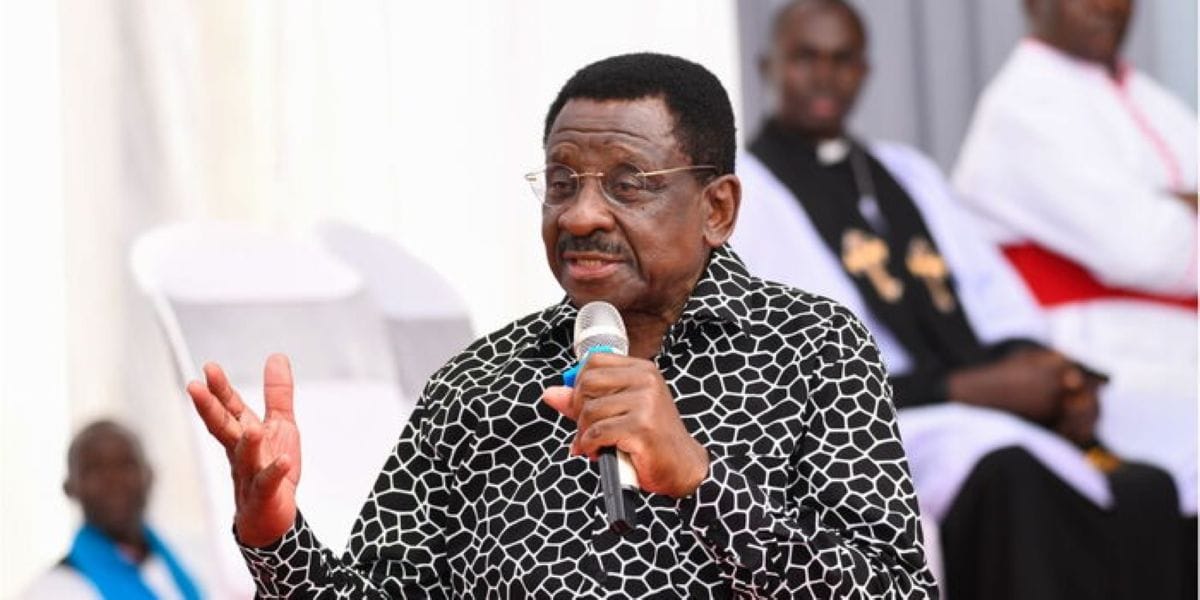
James Orengo has accused Boya Okoth of being the head of Kisumu gangsters and using his crew to attack Senator Godfrey Osotsi in a move meant to stir trouble for President William Ruto. The strong claim came during a public address that quickly spread across social media and left many in Nyanza asking what is really going on behind the violence in the lakeside city.
Orengo did not mince words. He informed the audience that Boya Okoth from Seme noticed Osotsi and promptly summoned the goons to execute the attack. He said such behaviour is not the way to build support for Ruto, and he warned that such tactics only damage the president’s image in the region.
The senator was caught on clear CCTV footage inside a Kisumu cafe earlier this week when masked men rushed in and beat him while he tried to protect himself. Staff members stepped in to stop the attack, but the images of Osotsi on the floor have stayed in people’s minds and fuelled anger across the country.
Boya Okoth has long been known in Kisumu circles as a figure who can mobilise crowds quickly. Some describe him as a community mobiliser, while others openly call him the go-to person when politicians need muscle on the street.
Orengo’s statement puts that reputation in a harsher light by linking him directly to the Osotsi incident. He depicted a scenario of deliberate violence, where local gang leaders are recruited to resolve political disputes.
According to Orengo, the plan backfired because it only made people sympathise with Osotsi and question why someone would use force against a sitting senator in broad daylight.
The timing of the accusation adds extra heat. Kisumu has seen rising political temperatures as parties position themselves for the next cycle of elections. Osotsi has been vocal on local issues, including land and resources in the region, and his words have not always sat well with those close to the national government.
Orengo suggested the attack was a clumsy attempt to silence that voice and make Ruto look tough on opposition figures. Instead, it has ignited renewed demands for peace and investigations into the true instigators of unrest in Nyanza.
People who follow local politics have reacted in different ways. Some residents in Kisumu say they are tired of seeing young men turned into tools for bigger players. They want leaders to focus on jobs and services instead of street fights.
Others point out that accusations like Orengo’s fly around every election season, and they wait to see if police will act on the claim or treat it as just another political speech. The senator himself has not issued a long statement yet, but his allies have demanded a full probe into the cafe incident and any links to known figures like Boya Okoth.
The CCTV shows ordinary customers scrambling for safety while the goons focused on him. That kind of targeted action raises serious questions about safety for public figures and ordinary citizens alike. If someone of Orengo’s stature is willing to publicly name names, it indicates that the situation has escalated to a point where remaining silent is perceived as more perilous than speaking out.
Kisumu leaders from different parties have started calling for calm. They say the city cannot afford another round of tension that scares away investors and hurts daily business.
At the same time youth groups in Seme and other areas have pushed back against the gangster label placed on Boya Okoth. They argue he helps organise community events and supports local talent, but the fresh accusation has forced them onto the defensive.
For now the police have the CCTV evidence and Orengo’s statement to work with. Detectives will likely look into phone records, movements and any known connections between Boya Okoth and the masked men in the video.
If the claims hold up, it could open a wider conversation about how political competition sometimes slips into outright intimidation. If they do not, the spotlight may turn back on Orengo for making serious allegations without enough proof.