

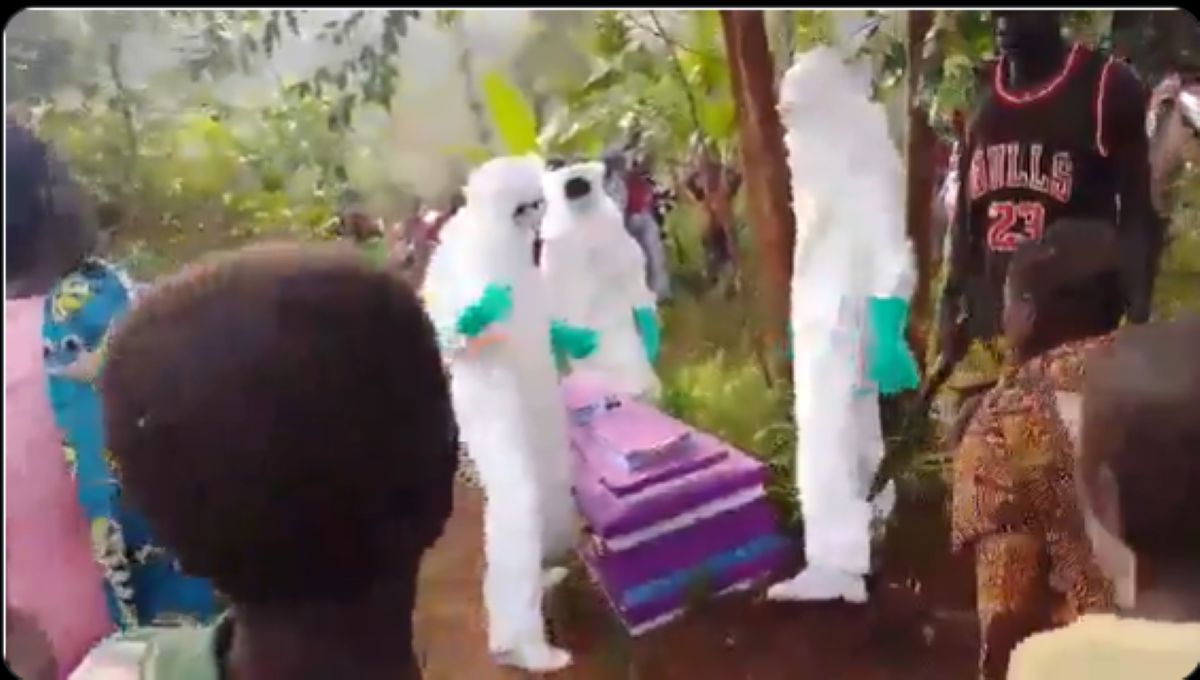
Health officials in eastern Democratic Republic of Congo warned on Saturday that the Congo Ebola outbreak could spread further across Ituri Province after angry residents interrupted a burial process and carried a suspected victim back home. The Congo Ebola outbreak has raised alarm in Bunia and nearby communities as mistrust, fear, and false claims weaken emergency response efforts.
Fresh fear gripped parts of eastern Democratic Republic of Congo this weekend after disturbing scenes from Ituri Province showed residents resisting Ebola response teams during a burial operation linked to the latest outbreak.
The tense incident happened in a government-controlled area near Bunia, the provincial capital of Ituri, where health workers have struggled to convince some communities that the virus poses a real threat. Video recordings shared locally showed crowds gathering around a burial site while members of a response team attempted to handle a suspected Ebola victim under strict safety rules.
People standing near the grave openly rejected warnings from health officials. Several voices insisted Ebola did not exist in their area. Tempers rose quickly as confusion spread through the crowd.
One man recording the scene shouted in Swahili and French, “They are running.” Moments later, people at the burial ground reportedly carried the body away and returned it to the family home after the medical team left the area.
The incident has deepened fears among health workers already battling poor road access, armed violence, and public mistrust in parts of eastern Congo.
According to figures from Congo’s Ministry of Health released on May 30, 2026, health teams continue monitoring dozens of contacts connected to confirmed and suspected Ebola cases in Ituri Province. Officials say rapid isolation and safe burials remain one of the strongest tools against the virus because infected bodies can still spread Ebola after death.
In Bunia on Saturday evening, small groups gathered outside pharmacies and roadside shops discussing the footage. Some residents blamed the government for weak communication. Others accused outside agencies of ignoring local traditions surrounding funerals and burials.
A motorcycle taxi rider named Pascal Djuma said fear drives many families to hide sick relatives.
“People panic when they see those white protective suits,” he said while waiting for customers near Bunia Central Market. “Some think once health teams take a patient away, the family will never see them again.”
What caused the Ebola burial conflict in Ituri Province?
Residents resisted the burial because many community members doubted the Ebola diagnosis and distrusted health workers handling the body.
That mistrust has haunted Ebola response efforts in eastern Congo for years. During earlier outbreaks between 2018 and 2020, armed attacks and rumours repeatedly disrupted medical operations across North Kivu and Ituri. The World Health Organization reported more than 2,200 deaths during that outbreak, making it one of the deadliest Ebola crises ever recorded.
In the latest confrontation, witnesses described a chaotic atmosphere filled with shouting, confusion, and fear. Dust rose from the ground as villagers crowded around the burial area. Children watched from a distance while adults argued with the response team.
One woman standing near the grave cried out, “We want to see him first.” Another man answered, “There is no Ebola here.”
Health workers eventually stepped back from the site as tensions grew. Doctors working in Ituri say such moments can trigger fresh chains of infection if exposed individuals handle infected remains without protection.
Dr Jean Baptiste Lokwa, a public health officer based in Bunia, warned during a local radio address on Saturday that unsafe burials place entire villages at risk.
“If families touch the body without protection, transmission can happen very fast,” he said. “We ask communities to work with response teams because Ebola spreads through direct contact.”
How dangerous is the current Congo Ebola outbreak?
Health officials fear the outbreak could expand because resistance to medical teams slows isolation and contact tracing efforts.
The Democratic Republic of Congo has recorded more than a dozen Ebola outbreaks since 1976. Experts say eastern provinces remain especially vulnerable because armed conflict often blocks healthcare access and fuels distrust toward authorities.
The latest scare arrives as neighbouring countries strengthen border surveillance. Uganda increased screening measures along parts of its western frontier this week, while health authorities in Rwanda and South Sudan also reviewed emergency preparedness systems.
In central Bunia, churches used Sunday gatherings to urge calm and encourage residents to report symptoms early. Some local leaders also pleaded with families not to hide suspected cases.
Father Emmanuel Adupa, speaking after mass near the Mudzi Pelé district, told worshippers, “Fear will not stop this sickness. Truth and cooperation will save lives.”
By Saturday night, response teams still searched for people who may have come into contact with the body shown in the burial dispute. Officials worry the delay could allow infections to spread quietly through nearby villages before symptoms appear.
For many families across Ituri Province, the fear no longer comes only from Ebola itself. It now comes from the growing divide between health workers trying to stop the virus and communities that no longer trust the warnings they hear.