

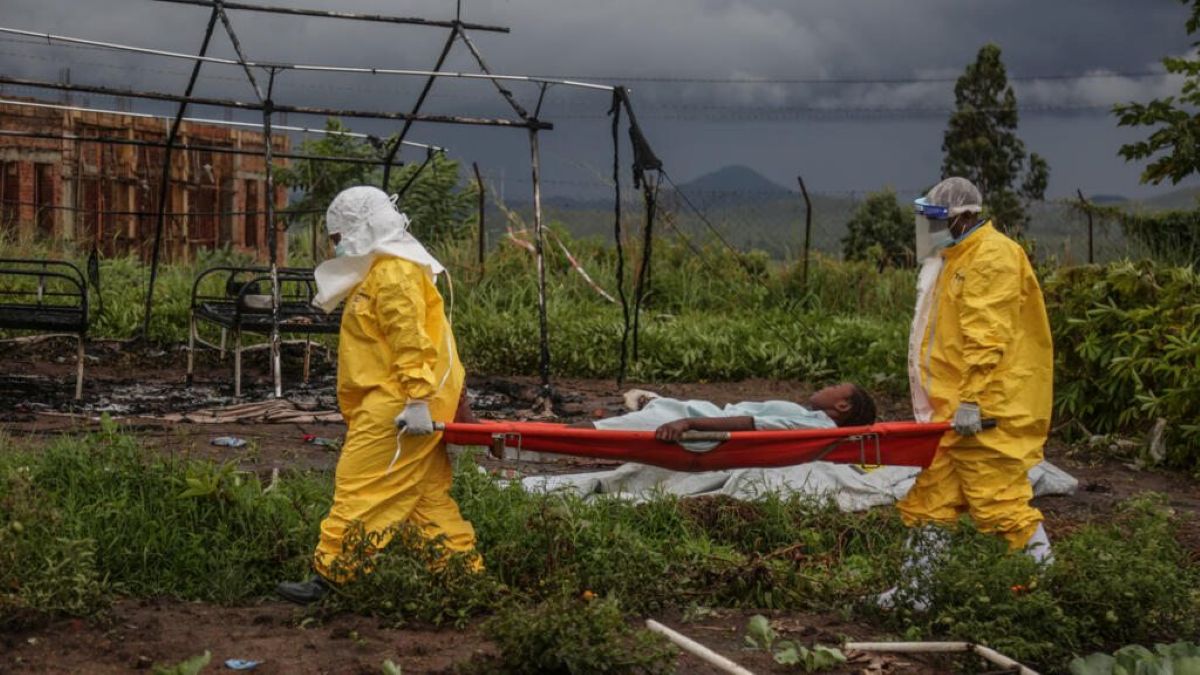
Kenya is facing rising pressure after reports emerged this week that a proposed Ebola quarantine plan linked to the United States could allow exposed American citizens into the country for isolation and treatment. The debate intensified in Nairobi after US Secretary of State Marco Rubio publicly rejected any possibility of Ebola patients entering America.
Fresh political and legal tension is building in Kenya after human rights lobby Katiba Institute moved to court seeking to block the establishment of an Ebola quarantine and treatment facility reportedly tied to a United States arrangement.
The petition, filed in Nairobi, comes days after remarks from US Secretary of State Marco Rubio drew global attention to Washington’s position on Ebola cases entering American territory.
“We cannot and will not allow any cases of Ebola to enter the United States,” Rubio said in his public address, words that quickly spread across Kenyan social media and news platforms by Thursday morning.
That statement has now fuelled anger and suspicion among some Kenyans who question why their country should host quarantine facilities linked to foreign nationals exposed to the deadly virus.
Outside the Milimani Law Courts in Nairobi, several activists gathered shortly after the petition became public.
Katiba Institute argues that the reported plan raises constitutional, legal, and public health concerns that require urgent court intervention before any action is taken.
In its court filing, the lobby group wants judges to stop the Kenyan government from establishing, approving, or operationalising any Ebola quarantine or treatment facility under any foreign agreement linked to the United States.
The organisation is also seeking orders to prevent the transfer or admission into Kenya of any individuals exposed to or infected with Ebola under the proposed framework.
Kenya Ebola Quarantine Facility Sparks Public Fear
The petition paints a picture of growing uncertainty around Kenya’s preparedness for a possible Ebola emergency. Lawyers representing the institute say the government must first provide clear details about safety systems, disease surveillance, emergency response plans, and the exact nature of the arrangement with Washington.
The court filing also seeks an order compelling the Ministry of Health to produce within 24 hours a full contingency plan showing how Kenya would manage any Ebola-related incident.
By Thursday afternoon, government officials had not publicly released detailed information about the alleged facility or confirmed whether a final agreement with the United States had been signed.
“If America says they cannot allow Ebola patients there, why should Kenya carry the burden?” asked Mary Atieno, a vegetable seller who listened to radio updates throughout the morning. “People are scared because Ebola is not something small.”
Others urged calm, saying Kenya has medical professionals capable of handling infectious diseases when proper systems are in place.
“Ebola is dangerous, yes, but outbreaks can be controlled when there are strict procedures,” an expert explained. “The problem here is that people feel they are hearing rumours instead of direct communication from authorities.”
The controversy has also reopened wider conversations about Kenya’s place in global health partnerships. Over the years, Kenya has hosted refugees, humanitarian operations, and regional emergency responses during health crises across East Africa.
Some observers say the latest reports place the government in a politically delicate position. Rejecting cooperation with a close ally such as the United States may carry diplomatic weight, yet accepting such a plan without public participation could trigger even deeper domestic backlash.
Inside legal circles, constitutional lawyers say the case could test how far the executive branch can enter international health agreements without parliamentary debate or public consultation.