

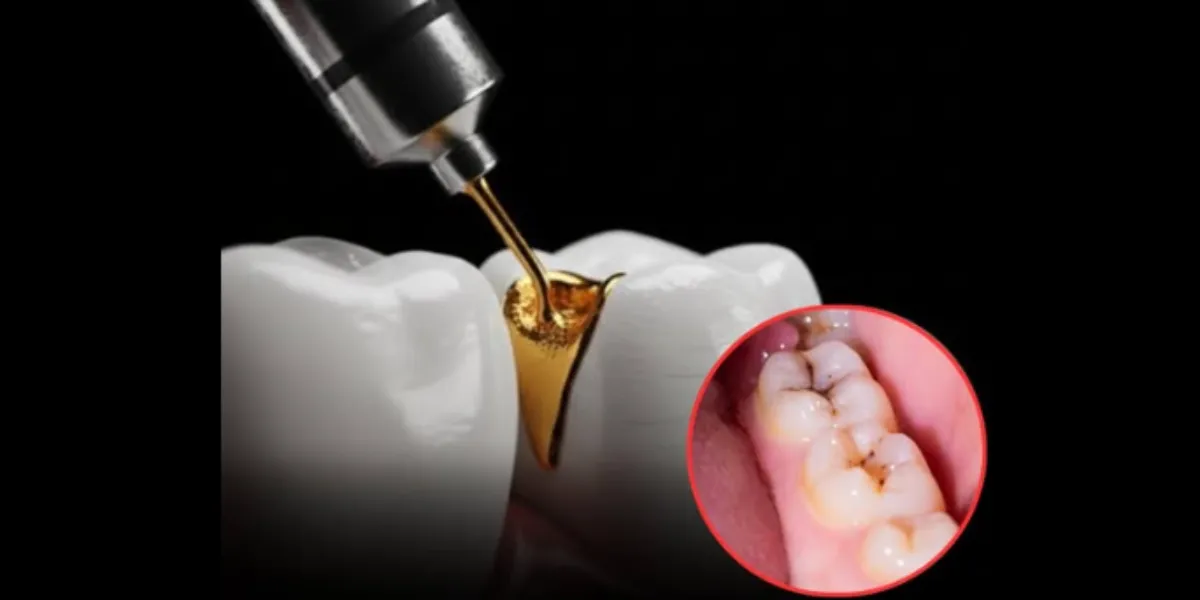
Researchers at the University of Nottingham have unveiled a revolutionary protein-based gel that can regrow tooth enamel, offering hope for a future where cavities are reversed without drills or fillings. The breakthrough, published this week in the Journal of Dental Research, marks the first time scientists have successfully mimicked the natural process that forms enamel during childhood, potentially transforming dental care worldwide.
Lead researcher Dr Emily Hargreaves explained that the gel contains synthetic peptides identical to amelogenin, the key protein responsible for organising calcium and phosphate into hard enamel crystals. When applied to a tooth surface, the gel self-assembles into a microscopic scaffold that guides minerals from saliva to deposit in exactly the right pattern.
“Within 14 days in the lab, we saw new enamel-like material forming that is virtually indistinguishable from natural enamel under a microscope,” she told journalists during a virtual briefing from the university’s Centre for Biomolecular Sciences.
Early tests on extracted human teeth showed the regrown layer bonded seamlessly with existing enamel and achieved hardness levels comparable to healthy teeth. Unlike current remineralisation pastes, which merely strengthen weakened areas, the Nottingham gel triggers true regeneration by recreating the developmental process. “This isn’t repair; it’s regrowth,” stressed co-developer Professor Adam Curtis.
The implications are enormous. Dental caries remains the most common chronic disease globally, affecting over 2.4 billion people. Traditional treatment relies on removing decayed tissue and filling the hole with composite resin, metal, or ceramic, none of which regenerate living tissue.
The new gel could halt decay at its earliest stage, before cavities even form. For children in low-income regions with limited access to dentists, a simple application during routine check-ups might prevent a lifetime of dental problems.
The team has already secured funding from the National Institute for Health and Care Research to begin human trials in early 2026. Initial safety studies on 60 volunteers will test whether the gel causes any irritation or unexpected mineral buildup.
If successful, larger efficacy trials will follow, with the first commercial product potentially reaching clinics by 2029 pending regulatory approval.
British Dental Association spokesperson Dr Laura Simmons welcomed the development but urged caution. “We’ve seen promising enamel regeneration research before, but this is the first to show such rapid, structured regrowth. If it translates to the clinic, it could reduce the 40 million fillings we place in the UK each year.”
Industry watchers predict major disruption for dental giants like Colgate and 3M if the gel succeeds. Consumer versions for home use, similar to whitening strips, are already under discussion, though experts stress professional application will likely be required initially to target specific lesions accurately.
For millions who fear the dentist’s drill, the Nottingham gel offers genuine hope. A single application could one day make “fillings” an antiquated concept, replacing them with a painless treatment that simply helps teeth heal themselves. As the researchers begin the long road to clinical approval, one thing is clear: the future of dentistry may have just taken its biggest leap since the invention of fluoride.