

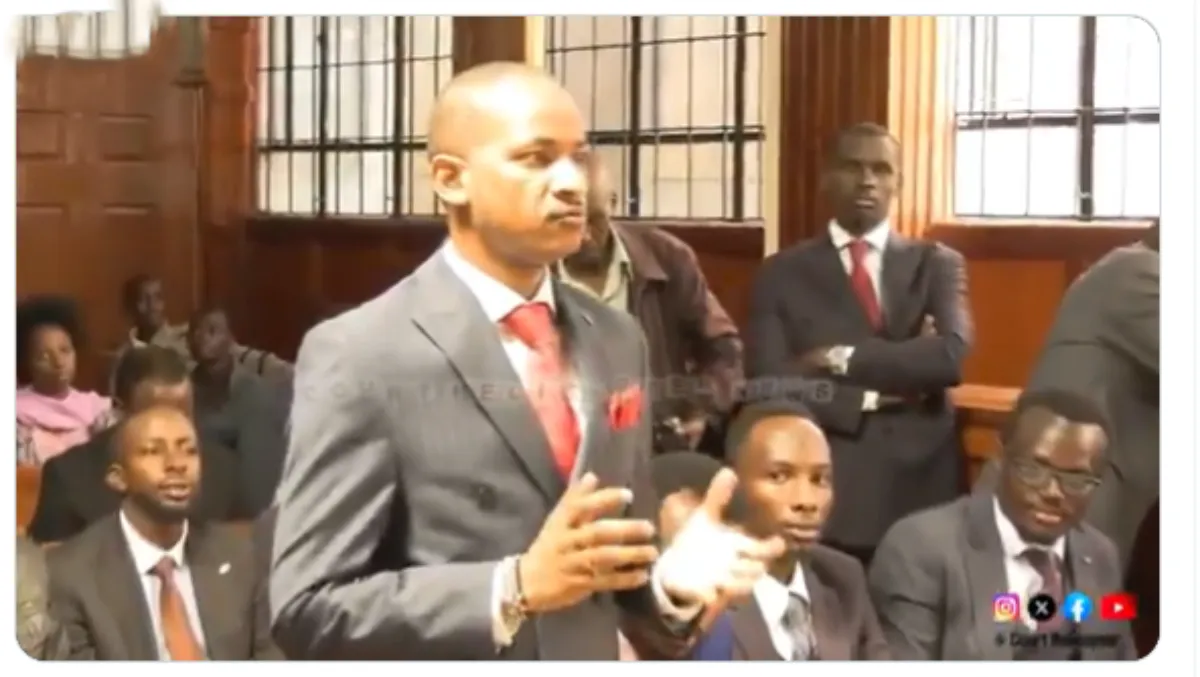
MP Babu Owino has celebrated the acquittal of political activist Nuru Okanga in a Nairobi court on January 20, 2026. Okanga had faced charges of threatening President William Ruto in a social media video. The case ended with the judge ruling there was not enough evidence to convict. Babu Owino, who helped lead the defense team, called the outcome a victory for justice and free speech.
The charges stemmed from a short clip Okanga posted online in early 2025. In the video, he used strong language against the president and warned of consequences if certain policies continued.
Prosecutors said it amounted to a credible threat under Kenya’s Computer Misuse and Cybercrimes Act. Okanga denied making or sharing the clip. His lawyers argued the video could have been edited or posted by someone else.
The trial dragged on for months. Delays happened because of missing witnesses, disputes over evidence, and questions about how the video was obtained. The prosecution relied on forensic reports claiming the clip came from Okanga’s phone.
Defense lawyers challenged the chain of custody and the accuracy of the analysis. They brought in their own experts who said the evidence did not prove Okanga created or uploaded it.
Babu Owino joined the defense early. As an MP and lawyer, he argued the case was politically motivated. He said the government wanted to silence critics ahead of 2027.
He questioned why similar videos from supporters of the ruling side faced no action. Other lawyers on the team included experienced advocates who focused on technical flaws in the prosecution’s case.
The judge agreed with the defense. In the ruling, the court said the evidence was circumstantial and did not meet the standard of proof beyond reasonable doubt. The video alone did not link Okanga directly to the threat. No metadata or clear digital trail placed it on his device. The case collapsed on insufficient proof.
After the verdict, Babu Owino spoke outside the courthouse. He said the acquittal showed the justice system can work when evidence is weak. He praised Okanga for staying strong through the long process.
“This is a win for every Kenyan who speaks truth to power,” he told reporters. Okanga hugged his lawyers and thanked supporters who waited outside.
The case drew attention because of its political nature. Okanga is known for criticizing the government on social media. He has faced arrests before on similar charges.
Many see him as part of a younger generation pushing back against authority. The ruling could encourage others to speak freely online, though cybercrime laws remain strict.
Prosecutors have not said if they will appeal. The Director of Public Prosecutions may review the decision. For now, Okanga walks free. He told reporters he plans to keep advocating for change but will be more careful online.
Babu Owino has built a name defending activists. He often takes on cases with political undertones. His involvement here added visibility. Supporters say he fights for the voiceless. Critics argue he sometimes turns legal matters into political shows.
The acquittal ends one chapter but leaves questions. How strong are cyber laws when evidence is weak? Will similar cases face the same scrutiny? For now, Okanga and his legal team see it as a clear win.
The story spread fast online. Many shared clips of Babu Owino speaking after court. Comments ranged from celebration to calls for caution. The case reminds Kenyans that free speech online still carries risks.