

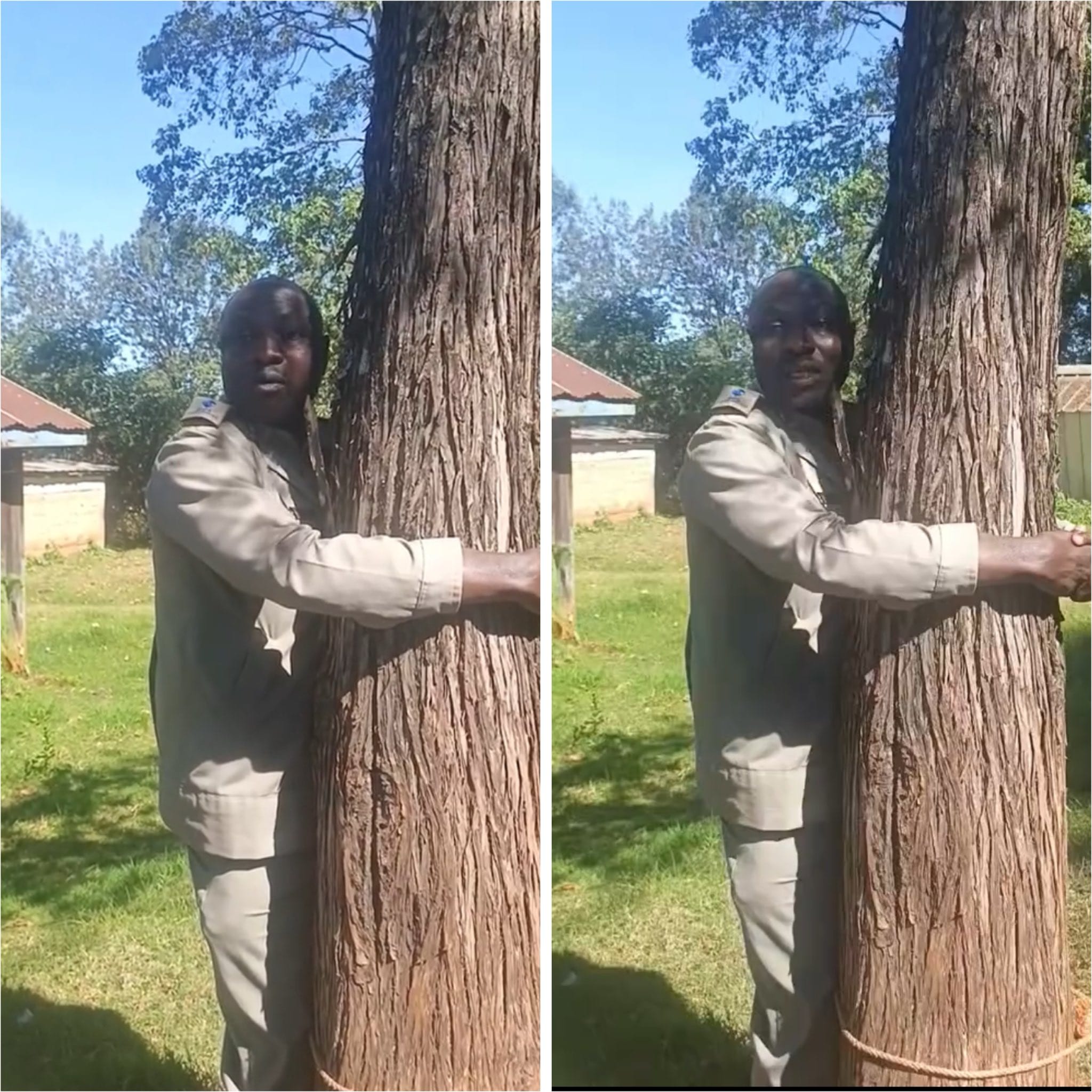
A police officer in Kericho County drew attention this week when he hugged a tree while on duty at Sossiot Police Station. Chief Inspector Kennedy Wanjala, the Officer Commanding Station there, was seen embracing a tree inside the station compound on Tuesday morning, January 20, 2026. Colleagues stepped in quickly, and he was taken for medical checks.
Reports from the scene say Wanjala appeared depressed and emotionally upset. Officers logged the matter as a welfare concern. They escorted him away for evaluation at a hospital. The police handled it quietly and with care. They promised to follow up on his condition. No one has released more details about his health since then.
The incident happened amid a growing trend in Kenya. People have started hugging trees for long periods to make a point. It began late last year when activist Truphena Muthoni hugged a tree for 72 hours straight. She did it near Mount Kenya to protest deforestation and the loss of indigenous forests. Her effort got recognised, and she even beat her own earlier record of 48 hours. That drew a lot of notice on social media and in the news.
After Muthoni’s stand, others picked up the idea. Some have hugged trees to raise awareness about different issues. There have been attempts linked to cancer awareness, the high cost of diabetes treatment, and other health or social problems. A woman in Turkana started one recently over expensive medicine for diabetes. The trend has spread fast, with people using it to highlight what matters to them.
But not everyone sees it as safe. Health officials have warned about the risks. Staying in one position that long can cause exhaustion, dehydration, or other problems. Public Health Principal Secretary Mary Muthoni even advised people to check their medical condition first before trying it. The physical strain is real, especially if someone pushes for many hours without breaks.
In Wanjala’s case, things looked different. Witnesses and videos shared online show him in full uniform, arms around the tree. He spoke about rising crime in the area.
He mentioned issues like men beating their wives, substance abuse in the neighbourhood; and growing cases of gender-based violence, including rape and defilement. Some reports say he was protesting insecurity and high crime rates that worry the community. He had only been at it a short time when fellow officers intervened.
A crowd gathered outside the station as word spread. People watched and took photos. The scene turned unusual for a police compound. Officers moved fast to end it and get him help. They treated the OCS as a sign he needed support, not punishment from the service.
This incident mixes the viral tree-hugging action with real concerns in policing. Wanjala holds a responsible post at Sossiot station in Belgut sub-county. Seeing an officer in that role show such distress raises questions about stress on the job.
For now, the focus stays on Wanjala’s wellbeing. The police say they are handling his situation sensitively. They want to make sure he gets the care he needs. The event also shines a light on how Kenyans adapt protest methods. Tree-hugging started as an environmental stand but has turned into a way for people to express frustration on many fronts. It shows creativity in activism, though safety has to come first.
The trend may continue, but cases like this remind everyone that these actions can affect health in unexpected ways. In Kericho, what started as a quiet morning at the station became a moment that got people talking across the country.