

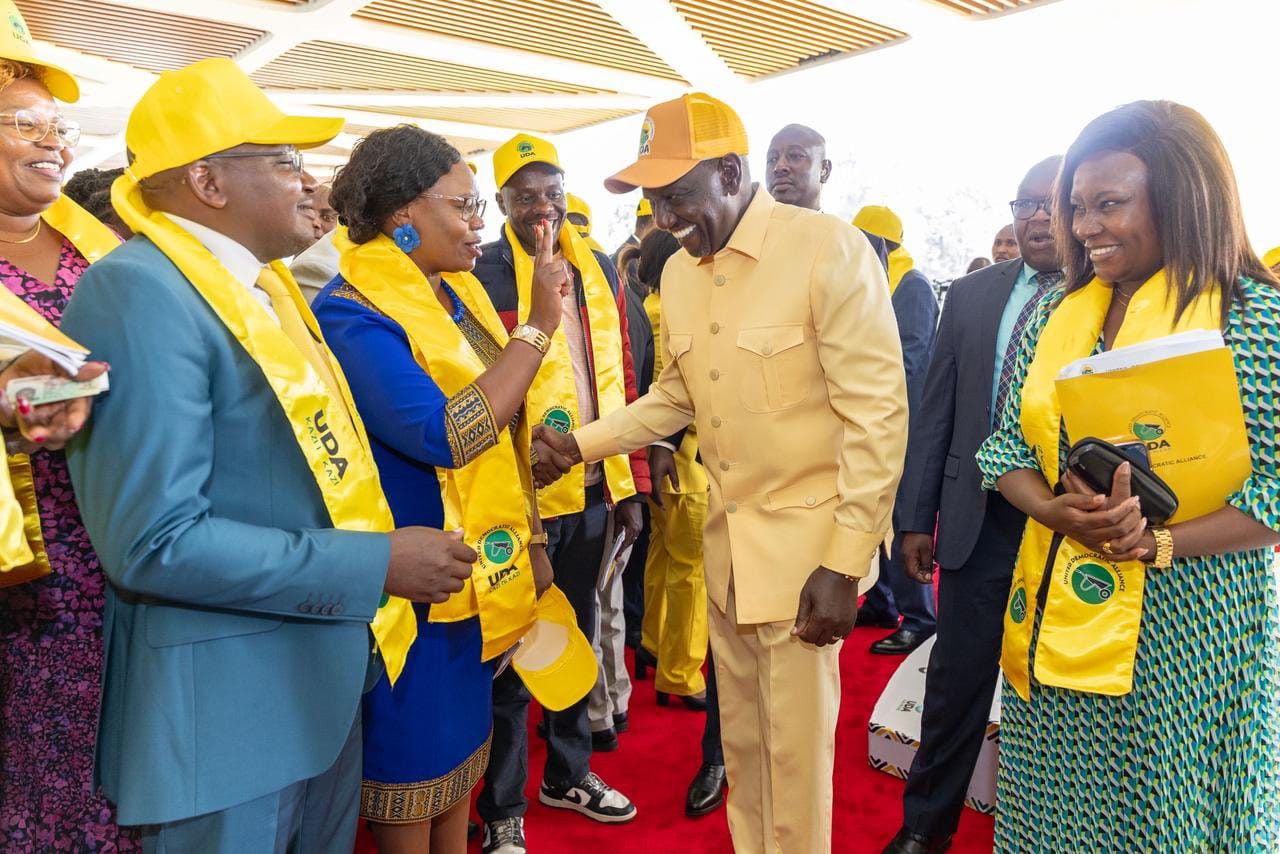
President William Ruto’s ODM coalition announcement came straight from the horse’s mouth during a packed United Democratic Alliance meeting at State House on Monday, where he revealed a fresh agreement with the Orange Democratic Movement to team up for the 2027 elections and crush the competition by a whopping 2-3 million votes.
It’s the kind of bold declaration that has Kenyan politics buzzing louder than a matatu horn in Nairobi rush hour, signalling a major shake-up in alliances just 18 months before voters hit the polls.
“We have agreed with ODM to form a coalition for the next election,” he said plainly, no fluff. “In that election, we aim to win by a margin of 2–3 million votes.” Simple words, but they pack a punch.
This isn’t some loose handshake; it’s a strategic merger between old rivals, blending Ruto’s Kenya Kwanza hustle with the late Raila Odinga’s Azimio grit. Think about it – these two have traded barbs for years, from the 2022 nail-biter where Ruto edged out Raila by a slim margin to the Gen Z protests in 2024 that forced both sides to rethink their plays.
Word from insiders is this coalition’s been brewing quietly for months. Ruto’s been courting ODM bigwigs since the death of Raila last year, leaving a bit of a vacuum in opposition ranks.
With the economy rebounding – inflation’s down to 4.2% this January, and those affordable housing units are popping up in places like Kisumu and Mombasa – Ruto’s betting on a united front to lock in votes from Luo Nyanza, the Coast and beyond.
ODM brings grassroots muscle, especially in western Kenya, where Raila’s legacy still pulls crowds. But critics are already crying foul, saying it’s a power grab that dilutes real opposition and turns politics into a two-horse race dominated by the same old faces.
Social media lit up immediately after the speech leaked. Folks in Eldoret, Ruto’s backyard, were celebrating like they’d won the lottery – posts about “unstoppable team” and memes of Ruto and Raila high-fiving.
Down in Kisumu, though, it’s mixed. One fisherman I chatted with over the phone said, “Raila taught us to fight the system; now he left us in it? We’ll see if it brings jobs or just more promises.”
Opposition holdouts like Martha Karua wasted no time slamming it as “opportunistic”, tweeting that true change doesn’t come from cosy deals in State House. Even some UDA faithful grumbled privately – why share the pie when you’re already at the table?
Ruto didn’t stop at the announcement; he laid out the game plan. He talked up joint campaigns starting mid-year, focusing on youth jobs through digital hubs and green energy projects.
“We’ve turned the economy around – exports up 15% last quarter, flood recovery on track,” he boasted, pointing to data from the Kenya National Bureau of Statistics. The 2-3 million vote margin? That’s ambitious, aiming for over 70% of the turnout based on 2022’s 13 million voters. Analysts say it’s doable if they mobilise urban youth and rural bases, but turnout could dip if voters feel sidelined by the mega-coalition.
This move echoes past pacts, like the 2002 Rainbow Coalition that swept Kibaki in or the 2013 Jubilee that launched Uhuru and Ruto. But times have changed – Gen Z’s watching, demanding accountability after their 2024 street push forced cabinet shake-ups.
Ruto addressed that too, promising “inclusive governance” with ODM getting key roles in policymaking. For everyday Kenyans scraping by in places like Kibera or Kitale, this could mean real shifts. A stronger coalition might fast-track infrastructure – think better roads in the West and more bursaries for kids.
But sceptics worry about corruption creeping back if checks and balances weaken. One trader in Gikomba market told me, “As long as unga prices stay low and jobs come, who cares about the label? But if it’s just talk, we’ll vote them out.”
As 2026 heats up, eyes are on how this plays out. Will smaller parties like Gachagua’s DCP or Wiper’s Kalonzo join or fight solo? Ruto’s confident, but politics here twists like a Nairobi alley. One thing’s sure: that 2-3 million margin goal sets the bar high. Voters will decide if it’s bravado or a blueprint. For now, the coalition’s on, and Kenya’s political map just got redrawn.