

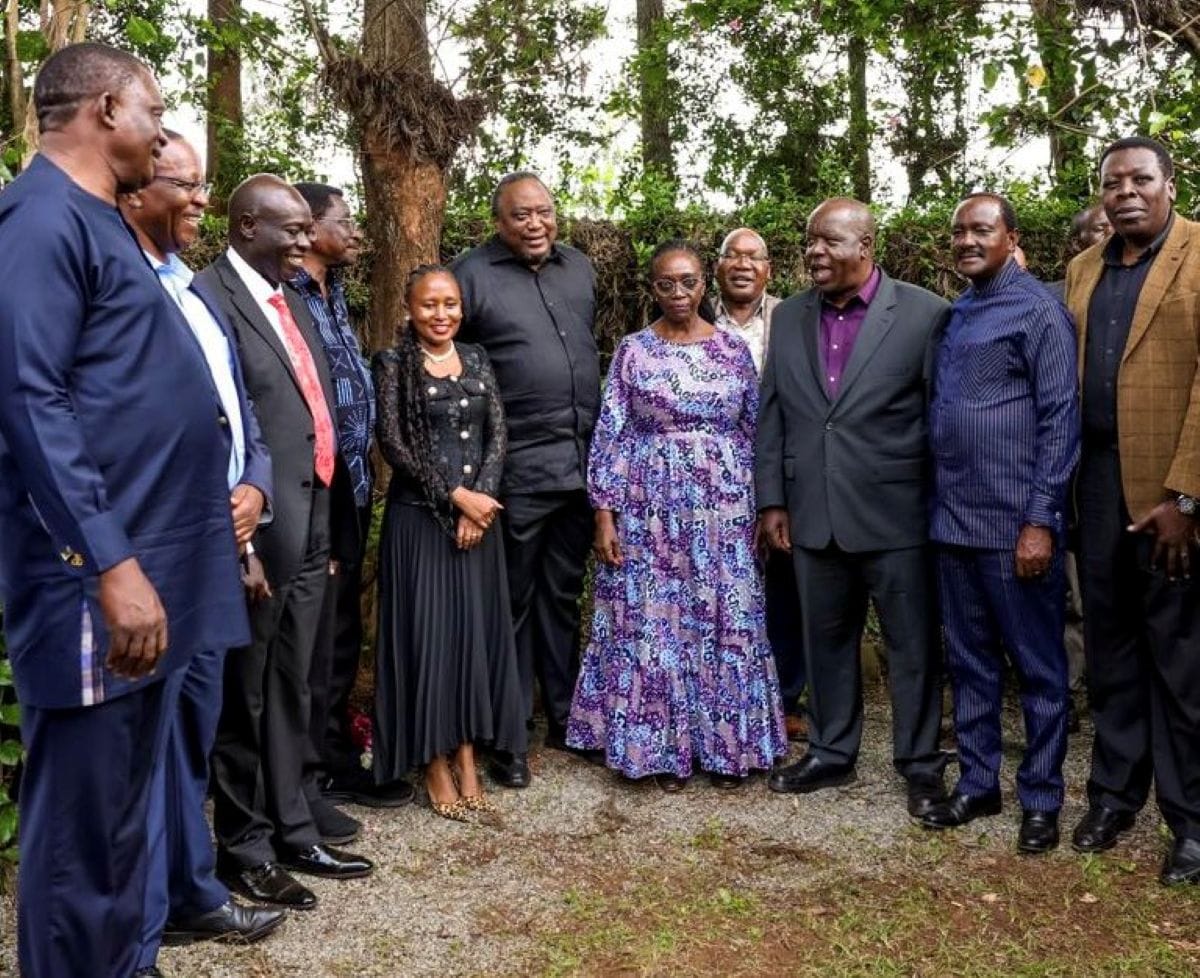
Karanja Kibicho urged Uhuru and Gachagua unity at the Kirinyaga burial with a strong plea not to embarrass the region. The former principal secretary delivered the message during the funeral service for former senator Daniel Karaba, where top opposition figures gathered.
Kibicho stood before the crowd and spoke directly to former president Uhuru Kenyatta, former deputy president Rigathi Gachagua and other leaders seated in the front row. His words carried weight in the packed venue.
He told them ‘Msituaibishe’, which means ‘do not embarrass us’ in plain Swahili. He reminded everyone that the late Karaba had brought them all together from different corners of the country and various political backgrounds. Now was the time to set aside old differences and focus on one clear goal. Work as one team to send the Gikomba Patron back to Sugoi.
Kibicho made it clear he wanted the opposition to unite and push Ruto out of power in the next election. He painted a picture of ordinary Kenyans struggling while their hard-earned money ends up in the wrong pockets. He said the country faces too many problems right now and leaders on the ground see the suffering every day.
The speech came at a moment when political eyes already focused on the funeral. Uhuru and Gachagua sat close and exchanged words earlier in the service.
Their public appearance together marked a rare moment of warmth after years of tension. Kibicho seized the opportunity to build on that energy. He appealed to their sense of responsibility toward the Mount Kenya region and the broader opposition cause. He asked them to stand up together and show the country they could put personal egos aside for the greater good.
People in the audience reacted with nods and murmurs of agreement. Some clapped as Kibicho drove his point home. The message resonated because many in Kirinyaga and surrounding areas feel the pinch of high living costs and tough economic times.
Kibicho, who once served as a powerful figure in government under Uhuru, knows the inner workings of politics. His call carried extra punch coming from someone with that background.
This gathering at Njegas Primary School in Kirinyaga turned into more than a simple burial. It became a platform for quiet political moves. Leaders like Kalonzo Musyoka and Martha Karua also attended, adding to the sense of a united front taking shape.
Kibicho’s words echoed what many opposition supporters have whispered for months. If the big names from the past can find common ground, they might create a strong challenge in 2027.
Not everyone welcomed the speech with open arms. Supporters of the current government dismissed it as empty talk from people who lost power and now want it back.
Some online comments joked about the sudden friendships formed at funerals. Yet for opposition voices the moment felt hopeful. They saw it as proof that old rivals could sit together and listen when the stakes involve the whole country.
Kibicho kept his tone respectful but firm. He addressed the front-row leaders with deference while making his request clear. He said the late senator Karaba would want to see them working hand in hand from his resting place.
The appeal mixed emotion with strategy. Funerals in Kenya often serve as neutral ground where politicians talk without the glare of campaign rallies. This one delivered a message that spread quickly across social media and local radio stations.
For everyday Kenyans following the story, the development stirs mixed feelings. Many want leaders who focus less on personal battles and more on solving daily problems like jobs and prices at the market.
If Uhuru, Gachagua, and others heed Kibicho’s words, it could significantly alter the landscape of opposition politics in the coming months. Unity talks might move from quiet funeral chats to more open plans.
As the burial ended and people headed home, the conversation continued in homes and online groups. Kibicho’s plea for leaders to avoid embarrassing the region resonated with those weary of division. The speech, however, added fresh fuel to discussions about the future of Kenyan politics, leaving the question of whether it will lead to real cooperation unanswered.