

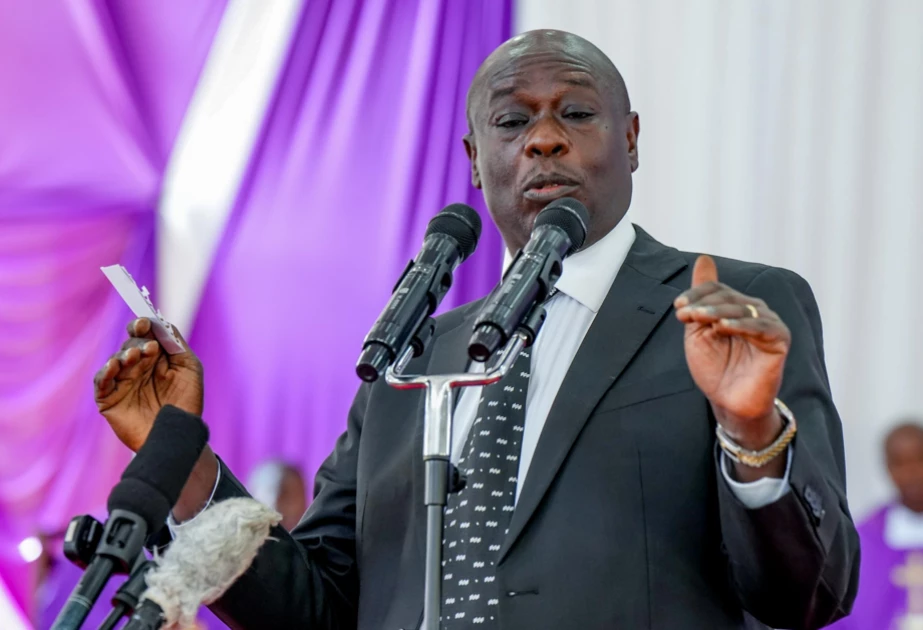
Gachagua claims Ruto stole Sh500M in seized oil money in the latest twist of the dirty oil scandal rocking Kenya. Former Deputy President Rigathi Gachagua dropped the heavy accusation during a public address that has set tongues wagging across the country.
He spoke on Sunday at a church gathering in Gatundu North within Kiambu County. There he laid out what he called the real story behind the sudden arrests of top energy officials.
The men in question include Petroleum Principal Secretary Mohamed Liban, EPRA Director General Daniel Kiptoo and Kenya Pipeline Company Managing Director Joe Sang. They had faced questioning over a suspected fuel import mess worth billions.
According to Gachagua, the trouble started with a government-to-government oil deal. President William Ruto uses it to bring in fuel through companies he controls such as Gulf Energy and Stabex.
The arrangement hands the state a big slice of the action. Yet these three men decided to go their own way and import cheaper fuel outside the official channel. They ended up pocketing nearly five hundred million shillings for themselves, or so the claim goes.
Gachagua painted a picture of betrayal inside the inner circle. He said someone tipped off the president that his own employees had played him. That is when things turned.
The officials got hauled in by detectives. They resigned under pressure. Cash recovered from their homes during searches vanished without a trace. The former deputy president insisted that money was supposed to serve as key evidence in the case. Instead, it ended up in the hands of the head of state.
He put it plainly in his speech. The officials made nearly five hundred million shillings, then Ruto was told these employees of yours have played you, so he decided to play them. That line drew cheers and murmurs from the crowd. Gachagua went further.
He described the whole affair as more of a business dispute than a straight fight against graft. The three men he said had tried to shield ordinary Kenyans from higher pump prices by bringing in affordable fuel. Their reward came in the form of handcuffs and forced exits from office.
The claims have stirred fresh debate about how power works at the top. Many remember that the fuel scandal first broke when authorities flagged irregular emergency purchases and messed up supply records.
Detectives moved fast and seized large sums during raids. Now the disappearance of that exact exhibit has raised eyebrows even among those who usually back the government.
Gachagua did not stop at the money. He reminded listeners that the government had already pumped one point three trillion shillings into the same oil import setup. He suggested the president benefited directly while the officials who tried to cut a separate path paid the price.
His words carried the weight of someone who once sat close to the centre of power. He even mentioned meeting people from the petroleum sector on Good Friday and hearing whispers about possible arrests before they happened.
Social media lit up within hours. Supporters of the former deputy president hailed him as the truthful man who keeps exposing what others hide. They shared clips of the speech and asked why the cash exhibit had not stayed locked up as evidence.
Critics on the other side dismissed it all as sour grapes from a politician nursing old grudges. Some pointed out that Gachagua has made similar bold statements before, and they often spark more heat than hard proof.
The Directorate of Criminal Investigations quickly pushed back. In an official statement, the agency called the accusations false, unfounded and malicious.
They insisted their work follows the law and no one directed them to hand over recovered funds to any individual. Still the denial has not slowed the conversation. Kenyans watching fuel prices at the pump wonder if the real story will ever come out fully.
This episode fits into a bigger pattern of tension between the president and his former number two. Since leaving office, Gachagua has positioned himself as a watchdog, calling out deals that hurt the ordinary citizen.
The oil matter touches everyday life because higher costs for diesel and petrol ripple through transport, food and business expenses. When someone like Gachagua links it straight to the top, it grabs attention fast.
People in the energy sector stay quiet for now. No word has come from the three officials since their resignations. Their lawyers may yet challenge the moves in court, but the public focus sits squarely on the missing cash. Five hundred million shillings does not simply disappear from official custody without questions.
Gachagua wrapped his address with a warning. He said the country should watch fuel prices in the coming weeks because the fallout from this internal fight could push costs higher. He urged Kenyans to stay alert and not accept easy explanations when big money vanishes.
The story keeps unfolding. Fresh reports suggest investigators continue digging into the import papers and bank trails. Whether Gachagua’s version holds up or gets disproven, the mere mention of the president and half a billion shillings in seized cash has already shifted the national mood.
It leaves many asking who really calls the shots when scandals hit the oil sector and whether exhibits meant for court ever see the inside of a safe again.
For now the former deputy president stands by every word he spoke in that church hall. He says the information came straight from insiders at Kenya Pipeline who know the daily flow of fuel deals. If true, it paints a troubling scene of personal scores settled with state power.