

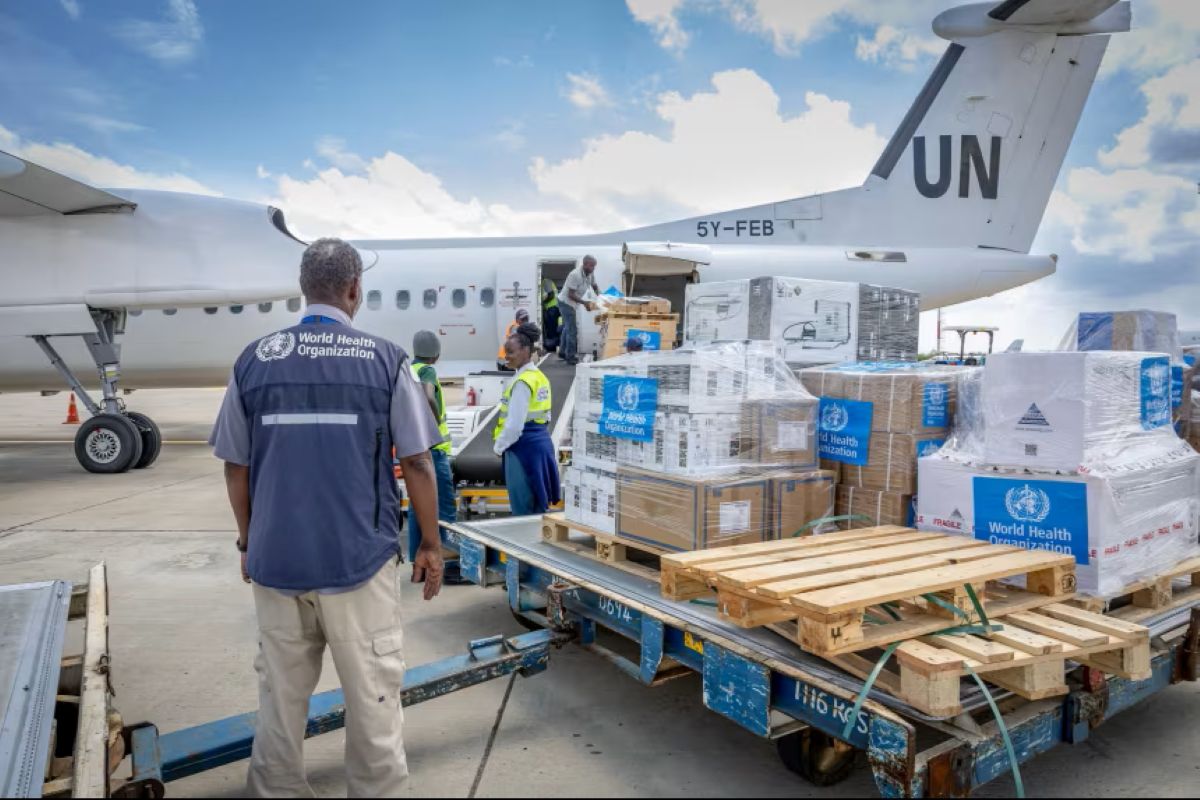
Kenya’s High Court stopped work on a U.S.-backed Ebola quarantine facility at Laikipia Air Base on May 28 after activists challenged the plan in Nairobi. The Kenya Ebola facility dispute erupted after officials linked the project to a $1.6 billion health agreement signed in December 2025 with Washington amid growing public anger.
A Kenyan court has frozen plans to build a 50-bed Ebola quarantine centre at Laikipia Air Base, throwing fresh heat onto a controversial health deal between Kenya and the United States.
Justice Patricia Nyaundi issued the orders on May 28 at the High Court in Nairobi after activists from the Katiba Institute filed a petition challenging the project. The judge blocked further construction until the court hears the matter on June 2.
The facility would reportedly host American workers exposed to Ebola in Ituri Province in the eastern Democratic Republic of Congo, a region that has battled repeated outbreaks over the past decade.
Court papers seen in Nairobi argue that the Kenyan government failed to involve the public before approving the project. Petitioners also questioned the health risks tied to handling Ebola-related cases inside Kenya when the country has not reported an active Ebola outbreak.
Outside the Milimani Law Courts on Wednesday afternoon, lawyers, journalists, and activists crowded the court steps as news of the ruling spread through mobile phones and radio broadcasts.
“This is not a small issue,” one activist shouted while supporters clapped nearby. “People deserve answers before deals like this move ahead.”
Why Did Kenya Stop the Ebola Quarantine Facility?
The High Court stopped the project because petitioners argued the government ignored public participation laws and exposed citizens to possible health risks.
The ruling landed hard inside political circles because the project connects directly to a $1.6 billion health cooperation agreement signed by Kenya and the United States in December 2025. Officials described that deal as part of a wider emergency preparedness plan for East Africa.
Critics now accuse leaders of placing foreign interests above local safety concerns. Laikipia Governor Joshua Irungu joined the growing resistance and publicly opposed the construction near the military air base. Residents in Nanyuki and nearby communities have also voiced fears about tourism, livestock trade, and travel restrictions if Ebola-related operations move into the area.
At a small market near Nanyuki town on Thursday morning, traders spoke anxiously while trucks rumbled past the highway toward Nyeri.
“Tourists hear the word ‘Ebola’ and they cancel trips immediately,” said vegetable seller Anne Wambui. “People here survive on tourism and farming. We cannot gamble with that.”
Data from Kenya’s Ministry of Tourism shows Laikipia County attracts thousands of visitors each year because of wildlife conservancies and luxury lodges. Local business owners now fear the dispute alone could damage the region’s image.
Could Kenya Face Travel Warnings Over Ebola Concerns?
Some activists fear foreign governments may issue travel advisories against Kenya if Ebola-linked quarantine operations continue.
That concern gained traction after members of the Katiba Institute sharply criticised the arrangement in public statements circulated online this week.
One institute member said in a speech to local activists, “America will transfer their Ebola-exposed citizens to Kenya and then offer aid, preparedness funding, and strategic partnership afterward. First comes the risk. Then comes the cheque.”
The activist continued with another pointed warning. “Watch the irony later. The same governments will issue travel advisories warning Americans not to visit Kenya.”
The remarks struck a nerve online, where many Kenyans already distrust foreign-backed health projects after the COVID-19 period.
The activist also claimed, “Top politicians in Kenya would rather pocket billions but let Kenyans get kicked out of countries.”
Canada recently tightened travel measures involving parts of Uganda, the Democratic Republic of Congo, and South Sudan because of regional disease concerns. Health experts say Kenya itself has not reported Ebola cases at this stage, but public fear continues to grow because of the proposed quarantine centre.
Government officials have defended the broader health partnership with Washington, arguing Kenya needs stronger emergency response systems as diseases increasingly cross borders through travel and trade.
Still, pressure keeps building. Civil society groups have already demanded full disclosure of agreements signed under the U.S.-Kenya health partnership.
As dusk settled over Nairobi on Thursday evening, radio talk shows kept returning to the same question repeated by callers from Kisumu, Eldoret, Mombasa, and Nakuru.
Why should Kenya carry a risk tied to another country’s outbreak when no Ebola cases exist inside its own borders?
That question now sits at the centre of a court fight that is likely to shape public trust in both Kenya’s health policy and its foreign partnerships for months to come.