
CVR-IEBC Low Voter Turnout, Iris Scanning Scares After WorldCoin Scandal
 Adhis Okena — October 11, 2025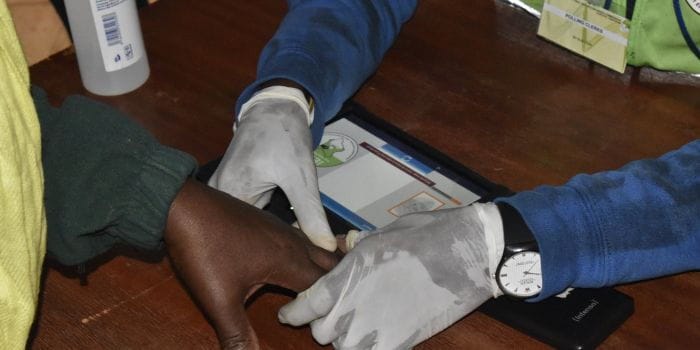
In a stark illustration of the challenges plaguing Kenya’s electoral process, the Independent Electoral and Boundaries Commission (IEBC) reported just 18 new voter registrations in the entire Nyamira County during the first week of the relaunched Continuous Voter Registration (CVR) exercise on September 29, 2025.
IEBC low voter registration turnout has ignited widespread concern, with officials scrambling to address a national figure hovering around a dismal 7,048 new sign-ups across the country, far short of the 6.3 million target for potential young voters.
As the nation gears up for future polls, whispers of tech-induced paranoia are growing louder, particularly around the introduction of iris scanning, which many link to the infamous Worldcoin data scandal.
Of the 20,754 new registrations, Nairobi led with 4,804, also receiving 1,105 total transfers and 10 updates. In the new registration process, one can register in any constituency to vote in a different one.
Mombasa was the second with 1,379, and Kiambu was third with 1,203 new registered voters, while the rest of the 44 counties recorded less than 1,000 new voter registrations.
Machakos had 923, Nakuru had 840, Kisii had 728, Kakamega had 608, Murang’a had 588, and Siaya had 564 newly registered voters.
Although most of the others recorded over 100 new voters, seven counties, including Nyamira County, went below.
Tana River, Lamu, Isiolo, Tharaka Nithi, Samburu, and Elgeyo Marakwet had 42, 36, 81, 70, 67, and 75 newly registered voters, respectively.
A local resident, a 28-year-old mother of two from Nyamira town, captured the sentiment swirling in her community. “After what happened with Worldcoin, people getting paid to scan their eyes and then hearing about data being sold overseas? No way we’re touching that again,” she told reporters outside a dusty registration centre, her voice laced with distrust.
“It’s like handing over your soul for a vote. We’d rather sit out than risk it.” The mother of two’s words echo a national undercurrent, where the 2023 Worldcoin episode, where thousands queued for crypto rewards only to face privacy backlash, has left a scar on biometric tech adoption.
The IEBC rolled out iris scanning as an enhancement to its Kenya Integrated Election Management System (KIEMS) kits, aiming to curb fraud and streamline verification on reused tablets.
But the move has backfired amid privacy jitters. The Elections Observation Group (ELOG) has demanded transparency, questioning how iris data will be stored and whether a Data Protection Impact Assessment was conducted.
“Voters deserve to know their biometrics aren’t floating in some unsecured cloud,” ELOG chair Reginald Oduor said in a statement, urging the commission to halt the feature until safeguards are proven.
Youth turnout, a key demographic for Kenya’s burgeoning Gen Z activism, has suffered the most, with many citing the scan as a non-starter. IEBC Commissioner Ann Nderitu voiced frustration over the sluggish pace during a press briefing.
“It’s a great concern that voter registration turnout is so low,” she admitted, pinning part of the blame on logistical hurdles in hard-to-reach areas and a lingering “tech phobia” fuelled by misinformation.
In response, the commission clarified that iris scanning is voluntary: “If you’re not comfortable, bypass it and register using the standard KIEMS process,” an IEBC spokesperson emphasised.
Sceptics argue the option feels like a half-measure, with some centres reportedly pushing the scan as essential. Will the IEBC scrap iris scanning altogether? Sources close to the commission hint at internal debates, with calls growing from civil society to revert to fingerprint-only verification, at least temporarily.
“We’re reviewing feedback daily,” Nderitu added, without committing to changes. As registration centres sit eerily quiet, some reporting zero walk-ins on weekdays, the clock ticks toward the 2027 elections.
Without trust rebuilt, experts warn, Kenya risks disenfranchising millions, turning a routine civic duty into a ghost town affair. This isn’t just about numbers; it’s a referendum on faith in institutions.
“Voting should empower us, not expose us,” she sighed, echoing a chorus that could redefine Kenya’s democratic pulse. IEBC’s next moves, perhaps ditching the scan or launching awareness drives, will be pivotal.
Related Posts

Murdered Itiko High School teacher leads to husband’s arrest
A 32-year-old secondary school teacher has died in a suspected murder in Mutitu North, Kitui County, with her husband arrested after police alleged he attempted…

Manhunt as Murder Suspects Escape Mwatamba Police Post
Two suspects in a murder case escaped from lawful custody at Kadzandani Police Station in Nyali, Mombasa County, in the early hours of Friday, prompting…

Roselinda Atwoli Rallies Behind Edwin Sifuna in the Western Region
Roselinda Atwoli stepped forward Friday to drum up fresh backing for Edwin Sifuna across the Western Region. She passionately urged the crowds to support the…

Hackers Seize Ruto’s Official Website, Demand Sh 41M Bitcoin
Cyber attackers took full control of the presidential site early Saturday and issued a stern deadline. They gave the State House until 6 PM today…