
IG Kanja Rejects Police Retirement Age Bill By MP Kaunya
 Adhis Okena — November 13, 2025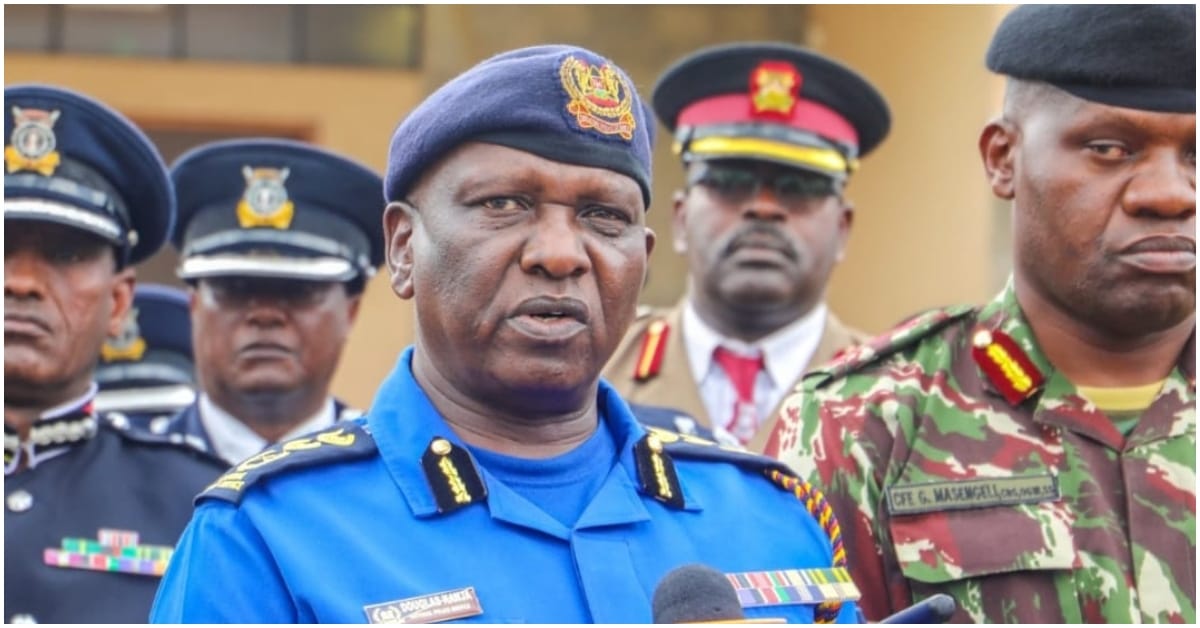
IG Kanja rejects the police retirement age bill in a firm stand that shows his belief in merit over milestones, as the National Police Service grapples with calls for structural overhaul.
The Inspector General, Douglas Kanja, voiced strong opposition during a press briefing at the police headquarters, dismissing the legislation as a potential threat to experienced leadership at a time when Kenya faces rising insecurity.
Sponsored by Teso North MP Oku Kaunya, the bill aims to enforce a retirement cap of 60 years for the IG and deputies, alongside a five-year term limit for deputy positions.
At 61, Kanja would face immediate exit if it sails through Parliament, a prospect he frames not as personal but principled.
Kanja, appointed just months ago amid high expectations for reform, leaned into his decades of service to bolster his case. “Competence and integrity must guide who leads our officers, not arbitrary numbers on a calendar,” he stated, his tone measured yet unyielding.
Flanked by senior commanders, he highlighted recent successes like the swift response to election-year unrest and community policing gains in volatile hotspots.
Critics, however, see his resistance as self-preservation, especially given whispers of performance reviews in his nascent tenure.
The bill’s push comes hot on the heels of the Maraga Taskforce recommendations, which urged depoliticising promotions to foster trust in the force long scarred by abuse allegations.
MP Kaunya, a vocal advocate for youth inclusion in public service, introduced the legislation last week amid bipartisan nods.
“We’ve seen too many careers linger past their prime, blocking fresh blood and diverse voices,” she told reporters in Busia, her home turf.
The proposal spells out clear timelines: IGs are out at 60, no exceptions, while deputies serve one renewable five-year stint. Proponents argue this mirrors global standards, citing examples from the UK’s age-neutral but term-bound police chiefs.
For Kenya, it could mean injecting gender balance, as the bill mandates at least one female deputy, addressing the male-dominated echelons where women hold under 15 percent of top roles.
Not everyone aligns with Kanja’s view. Ahmed Issack Hassan, chair of the Independent Policing Oversight Authority, threw his weight behind the bill in a statement released hours after Kanja’s remarks.
“This aligns squarely with the Maraga reforms, promoting accountability and equity,” Hassan asserted.
He pointed to stalled probes into past atrocities, like the 2022 protest crackdowns, as evidence that entrenched leadership breeds complacency.
Hassan’s IPOA has long championed such changes, filing amicus briefs in related court cases. His endorsement adds firepower, potentially swaying undecided MPs wary of clashing with the security apparatus.
“Age caps prevent fossilised thinking in a force meant to serve a dynamic youth bulge,” said the watchdog executive director.
Kanja’s rebuttal hints at a broader strategy. He pledged to lobby allies in the National Assembly, emphasising how the bill could disrupt ongoing initiatives like digital forensics upgrades and officer wellness programmes.
“Forcing out proven hands now would hand victories to criminals on a platter,” he warned, alluding to the Mombasa port smuggling rings and Nairobi’s petty theft surges.
Yet opposition heavyweights, including Minority Whip Junet Mohammed, signal support for Kaunya’s move, tying it to their anti-corruption manifesto.
As Parliament reconvenes next week, eyes lock on key committees like Security and Justice. The bill’s fate could ripple through the 2027 polls, where policing reforms loom large for voter trust.
For Kanja, it’s a high-stakes pivot: yield ground and risk legacy dilution, or dig in and face accusations of elitism.
Hassan, ever the reformer, calls for compromise, perhaps a phased rollout sparing current incumbents. In Kenya’s fractious security arena, where trust rebuilds one policy at a time, this clash tests whether age truly withers wisdom or merely makes room for renewal.
Beyond the Hill, rank-and-file officers watch warily. A junior sergeant from Kitui, speaking anonymously, shared mixed feelings: “The boss has our backs on the streets, but fresh ideas might keep us safer long-term.”
Unions like the Kenya National Police Service Commission eye salary bumps tied to the bill, adding economic layers to the fray.
This IG, Kanja, rejects the police retirement age bill saga, which captures Kenya’s reform tug-of-war, where personal stakes collide with public good.
Related Posts

Governor Mutula Kilonzo Junior to Exit Politics in 2032
Makueni County residents heard a clear pledge this week as their leader Mutula Kilonzo Junior declared that any win in the following polls would mark…

Gachagua Draws Thousands During Narok East DCP Tour
Former Deputy President Rigathi Gachagua packed roads and grounds in Narok East on Monday as his Democracy for the Citizens Party push gathered force. Huge…
Ruto Urges Allies to Defend Record Against Opposition Fake News
President William Ruto pressed lawmakers, senators, governors, and cabinet secretaries from the UDA ODM broad-based government in Naivasha on Monday to fight back. He accused…

Police Arrest Fake Officer Over Bribes In Chepkumia, Nandi
Police officers in Nandi County moved quickly against a man at Chepkumia who posed as one of their own. The suspect carried a full set…