
Ruto: I will move Kenya to first-world country before I die

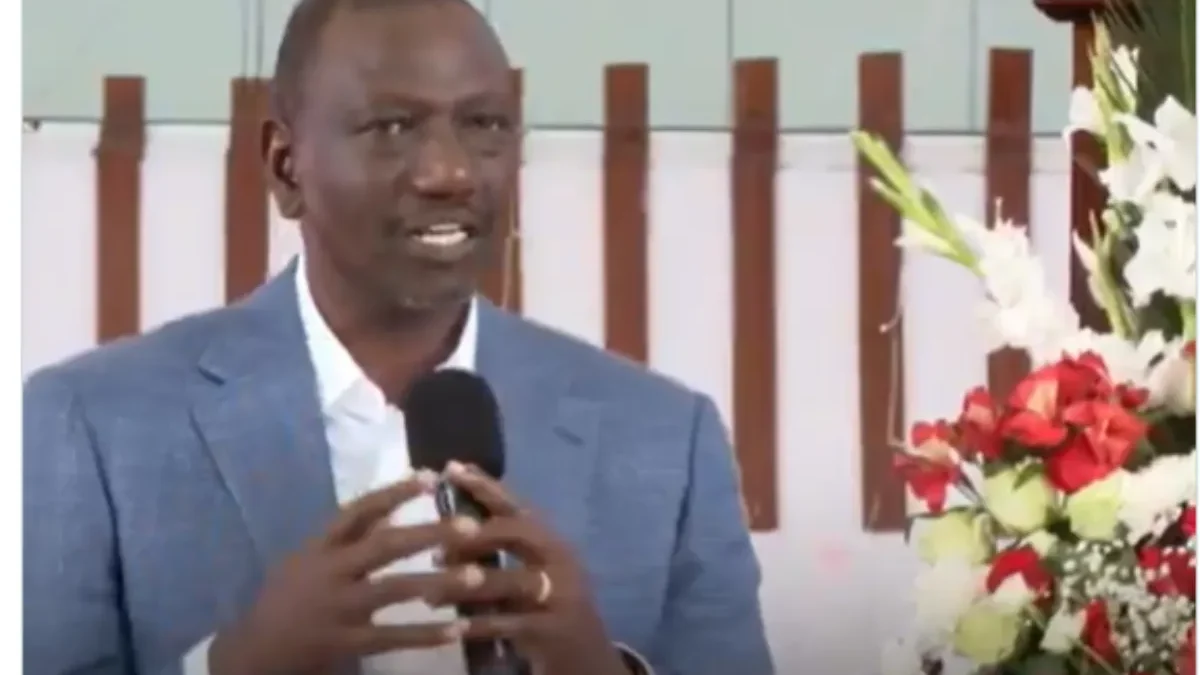
Ruto vows Kenya will be a first-world nation in 30 years before he dies after the President declared during a packed Sunday service at AIC Milimani that he is personally committed to transforming Kenya from a third-world country to a first-world powerhouse within the next three decades, well before he reaches the age of 90.
Speaking to hundreds of worshippers in the capital on November 30, 2025, President William Ruto said the dream is not only achievable but already in motion.
“I have no doubt in my mind that it is possible to move Kenya from a third-world country to a first-world country before I die,” he told the congregation.
“By the time I get to 90, Kenya should be a first-world country. Who says Kenya cannot move from the third world to the first world in 30 years? We can do it. Believe me, we will do it.”
The President framed the journey as both economic and spiritual, crediting divine intervention for pulling Kenya out of what he described as a near-collapse three years ago.
“Three years ago we were struggling with the economy, struggling with education; our health system was not together, and our economy was not doing well. But God has healed our economy. He has changed things for us,” he said, drawing loud amens from the pews.
He pointed to tangible progress as proof of the turnaround: the just-commissioned 175-kilometre Rironi-Nakuru-Mau Summit motorway, built through an innovative public-private partnership that avoided fresh borrowing, and upcoming launches of four more flagship infrastructure projects in 2026.
The new highway, part of a 233-kilometre corridor linking Nairobi to Malaba on the Ugandan border, is expected to cut travel time between the capital and western Kenya from eight hours to under three while opening up half the country to faster trade and investment.
Ruto contrasted Kenya’s post-independence record of only 22,000 kilometres of tarmacked roads with Japan’s one million kilometres built over roughly the same period, calling the new model a decisive break from decades of either borrowing heavily, overtaxing citizens, or doing nothing. “For too long we were stuck in that cycle. This project proves we can build smarter and still deliver transformation,” he said.
The President’s 30-year vision quickly became the talking point across the country. In Nairobi’s matatus and village tea kiosks alike, people debated whether Kenya could truly leapfrog into first-world status by 2055.
Economists noted that nations like South Korea and Singapore achieved similar transformations in roughly that timeframe, moving from per capita incomes comparable to Kenya’s in the 1960s to over $40,000 today through disciplined industrial policy, massive infrastructure investment, and human capital development.
Youth in the congregation appeared energised. “If the President believes it at his age, who are we to doubt?” said 28-year-old teacher Mercy Kiprono after the service.
Others were more cautious, pointing to persistent challenges: youth unemployment still above 35 per cent, public debt servicing consuming nearly 60 per cent of revenue, and climate shocks hammering agriculture.
Church leaders embraced the message. AIC Bishop, hosting the President, called it “a prophetic declaration” and announced plans for nationwide prayer rallies in 2026 focused on national transformation.
Opposition figures were quieter than usual; Cabinet Secretary John Mbadi said, “Vision is good, delivery is better. Let us see the jobs and factories.”
Whether Kenyans will rally behind the long-term dream or demand quicker relief from today’s hardships remains the open question. For now, Ruto vows Kenya will be a first-world nation in 30 years, before he dies, and has given the country its boldest national ambition since Vision 2030 was launched nearly two decades ago, this time with an intensely personal deadline attached.
Related Posts
Ruiru Night Biter Terror Strikes Gitothua Residents Hard
A man from Ruiru barely dodged the clutches of a night attacker who bites people under cover of darkness. Residents in Gitothua now lock doors…

Murdered Itiko High School teacher leads to husband’s arrest
A 32-year-old secondary school teacher has died in a suspected murder in Mutitu North, Kitui County, with her husband arrested after police alleged he attempted…

Manhunt as Murder Suspects Escape Mwatamba Police Post
Two suspects in a murder case escaped from lawful custody at Kadzandani Police Station in Nyali, Mombasa County, in the early hours of Friday, prompting…
Roselinda Atwoli Rallies Behind Edwin Sifuna in the Western Region
Roselinda Atwoli stepped forward Friday to drum up fresh backing for Edwin Sifuna across the Western Region. She passionately urged the crowds to support the…