
Safaricom Quietly Halves Mobile Data Bundles, Doubling Costs

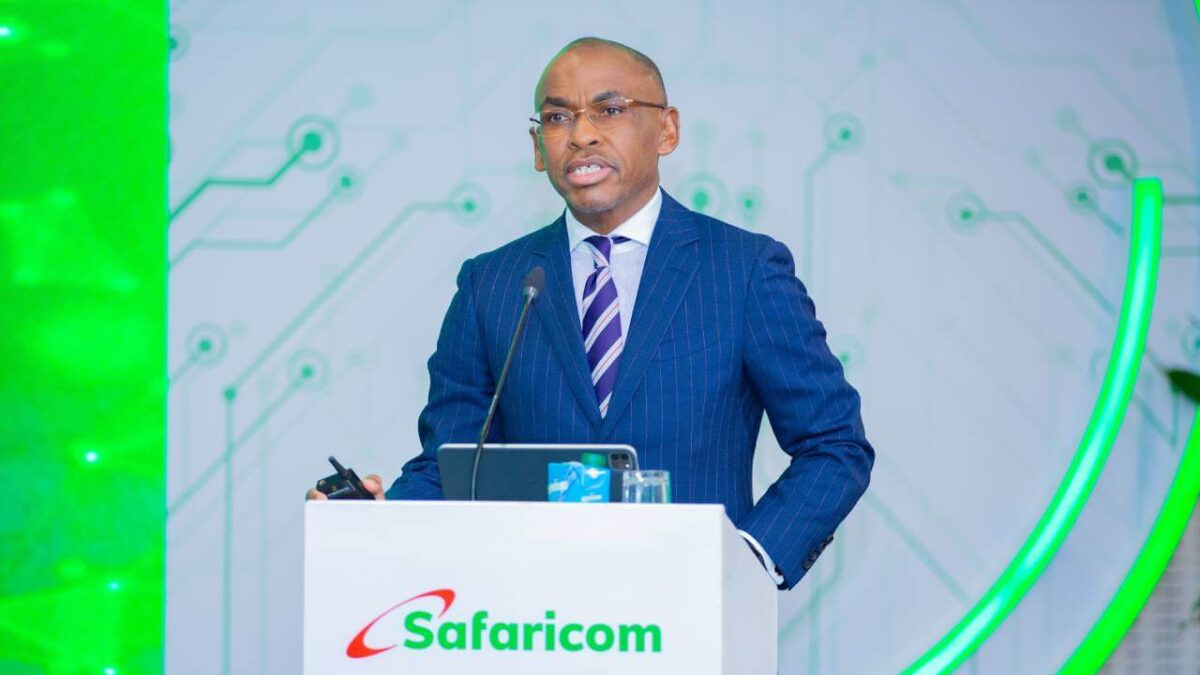
Safaricom has quietly halved several popular mobile data bundles, effectively doubling the cost per megabyte for millions of subscribers who rely on affordable internet access for daily essentials like education, work and social networks.
The changes, which took effect over the weekend without prior notice or public announcement, have caught loyal customers off guard and sparked widespread frustration across Kenya’s digital landscape.
For instance, the non-expiring data packages, long favoured by users for their flexibility, now deliver half the value. An Sh51 purchase that once unlocked 255MB of data valid indefinitely now provides just 102MB, while Sh100 yields 200MB instead of the previous 400MB. Similarly, the Sh250 bundle has shrunk from 1GB to 500MB, leaving budget-conscious Kenyans paying twice as much for the same connectivity.
Safaricom, Kenya’s dominant telecom giant with a commanding 62.8 per cent share of the mobile broadband market as of June 2025, controls the pricing and allocation of data resources for over 40 million active users.
The telco’s silence on the adjustments has fuelled accusations of stealth price hikes, especially amid ongoing economic pressures from inflation and rising living costs.
Subscribers on Wednesday discover the reductions through trial and error when dialling the familiar 544# USSD code.
This is not the first time Safaricom has tweaked its offerings in ways that erode affordability. Back in August 2025, the company rolled out B-Live, a time-based data product promising “worry-free” internet by charging for hours rather than gigabytes.
Priced from Sh10 for one hour of unlimited access, it aimed to address complaints about rapid bundle depletion due to background apps or video streaming.
However, users quickly reported throttled speeds after heavy usage and restrictions like disabled hotspotting, which limited sharing with family members.
While innovative on paper, B-Live has drawn mixed reviews, with some praising the predictability but others decrying hidden fair-usage caps that mirror the very frustrations it sought to solve.
In rural areas like Kitui and Turkana, where alternatives are scarce, residents say the changes could widen the digital divide. “I use data to apply for jobs online and teach my kids via YouTube.
Now every shilling counts double, and I can’t afford it,” shared Mary Wanjiku, a single mother in Nairobi’s informal settlements, in a viral X post.
Competitors like Airtel Kenya have seized the moment to highlight their value. Airtel’s equivalent one-hour 1GB bundle costs Sh15, compared to Safaricom’s Sh20 for 700MB, while monthly plans offer 50GB for Sh2,000 versus Safaricom’s 25GB at Sh2,000.
Faiba and Telkom also undercut per-GB rates, prompting a wave of porting requests to rival networks.
Tech forums buzz with tips on workarounds, from switching to eSIMs for dual-SIM deals to hunting hidden promotions in the MySafaricom app. Yet, for many small business owners streaming live sales or farmers accessing market prices via apps, the stealth cut feels like a direct hit to livelihoods.
Experts point to underlying factors driving these moves. Kenya’s mobile data consumption exploded by 25 per cent in the first half of 2025, straining networks despite Safaricom’s investments in 5G rollouts and spectrum acquisitions at 700 MHz and 900 MHz.
Rising operational costs, including diesel for base stations amid fuel price volatility, may justify adjustments, but critics argue transparency is non-negotiable.
“Telcos must treat customers as partners, not captives. Silent hikes erode trust in an era where data is oxygen,” said a subscriber.
As backlash mounts, calls grow for regulatory intervention to cap arbitrary changes and enforce clearer labelling of bundle terms. For now, affected users are advised to check balances via 544# or the app, explore all-in-one voice-data-SMS plans starting at Sh1,000 for 6GB monthly, or consider Bonga Points redemptions for partial relief.
With Kenya’s internet penetration hovering at 92 percent, the quiet halving of mobile data bundles underscores a harsh reality: in the rush for profits, connectivity’s true cost is rising faster than ever for the everyday Kenyan.
Related Posts

Lumumba Vea Signs Rexona Deal at 2026 World Cup
Congolese superfan Lumumba Vea signs Rexona deals with the 2026 World Cup in Mexico after his motionless tribute pose captured global attention. The passionate supporter…

Doky Dorcas Sets New Guinness Record for Fastest Chapatis
Doky Dorcas claimed the title for the fastest chapatis when she whipped up three fresh ones in record time at Ongata Rongai on December 15,…

Ruto Fires Back at Gideon Moi Accusing Him of SG Media Headlines…
President William Ruto hit out sharply at Gideon Moi and Standard Media over what he calls daily extortion through headlines. The strong social media post…

Banking for Business Growth – Don’t Miss This Masterclass By Co-op Bank
Starting and growing a business comes with many opportunities, but it also requires the right financial support to succeed.Join us this Friday as we explore…