
Trump Vows Permanent Pause on Migration from Third World Countries

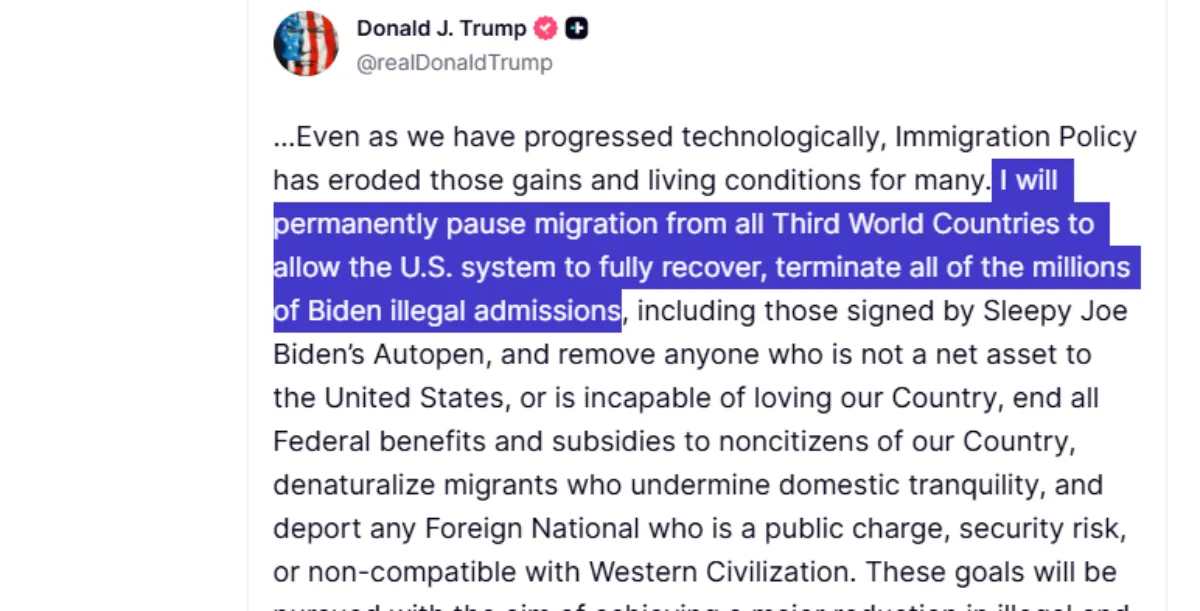
U.S. President Donald Trump has vowed to permanently pause migration from all Third World countries, framing the sweeping policy shift as essential to reversing what he calls the erosion of American progress caused by unchecked immigration, in a fiery Thanksgiving message that ignited fierce national debate.
The announcement, delivered via a lengthy Truth Social post late on Thanksgiving Day, November 27, 2025, came amid heightened tensions following the fatal shootings of two National Guard members near the White House by an Afghan national, Rahmanullah Lakanwal, who entered the U.S. under Biden-era programs.
Trump lambasted previous administration policies, accusing them of admitting millions through “illegal” means, including documents signed by President Joe Biden’s autopen, and promised a comprehensive overhaul to deport those deemed “not a net asset” to the nation.
In the post, which racked up over five million views within hours, Trump outlined a multi-pronged strategy: halting all migration from developing nations indefinitely to let the U.S. “system fully recover,” terminating Biden-era admissions, stripping federal benefits from noncitizens, denaturalising those who “undermine domestic tranquilly,” and deporting public charges, security risks, or individuals “not compatible with Western civilisation.”
He capped the message with a stark warning: “HAPPY THANKSGIVING TO ALL, except those that hate, steal, murder, and destroy everything that America stands for. You won’t be here for long!”
The rhetoric drew immediate backlash from immigrant rights advocates, who labelled it xenophobic and unconstitutional. The American Civil Liberties Union (ACLU) announced plans to challenge the proposed pause in federal court, arguing it violates due process and international refugee conventions.
“This is not policy; it’s prejudice dressed as patriotism,” said ACLU executive director Anthony Romero in a statement released Friday morning. Democratic leaders, including Senate Minority Leader Chuck Schumer, called the post “a Thanksgiving turkey of hate speech” that risks alienating allies abroad.
On the Republican side, supporters rallied behind the president. House Speaker Mike Johnson praised the move as “bold leadership to protect American workers and sovereignty,” while former Trump advisor Stephen Miller tweeted that “reverse migration is the only cure for Biden’s border invasion.”
Polling firm Rasmussen Reports captured early sentiment, showing 58 percent of Republicans approving the pause, compared to 22 percent of Democrats overall.
The timing amplified the controversy. Just hours before Trump’s post, U.S. Citizenship and Immigration Services (USCIS) suspended all immigration applications from Afghan nationals indefinitely, citing the D.C. shooting as a catalyst for heightened scrutiny.
USCIS Director Joseph Edlow further ordered a “full-scale reexamination” of Green Cards held by immigrants from 19 countries flagged in a prior presidential proclamation, including Afghanistan, Somalia, and Haiti. Critics fear this could ensnare legal residents in bureaucratic limbo, echoing the 2017 travel ban’s chaos.
Trump’s message also spotlighted broader grievances, claiming a foreign-born population of 53 million—mostly on welfare from “failed nations”—fuels social ills like failing schools, urban decay, and deficits.
He singled out Minnesota’s Somali community and Rep. Ilhan Omar, accusing her of ingratitude toward a nation that welcomed her from a “decadent, backward” homeland. Omar fired back on X, writing, “Grateful immigrants built this country. Your hate won’t erase that truth.”
Economists offered mixed views on the pause’s feasibility. The Migration Policy Institute estimated it could slash legal immigration by 40 per cent annually, impacting sectors like agriculture and tech reliant on skilled visas.
“While it addresses public concerns regarding security, it ignores labour shortages in an ageing workforce,” said analyst Julia Gelatt. Proponents, however, point to studies linking high immigration to wage stagnation for low-skilled natives.
Internationally, reactions poured in swiftly. The United Nations High Commissioner for Refugees expressed “deep concern” over the pause, warning it could strand millions fleeing conflict.
Leaders from Mexico and India urged dialogue, fearing strained trade ties. In Europe, UK Prime Minister Keir Starmer called for “balanced borders, not blanket bans.”
Trump’s team signalled executive action as early as next week, potentially invoking the Immigration and Nationality Act’s national security provisions.
With midterms looming in 2026, the permanent pause on migration from Third World countries positions him to rally his base, even as it tests the limits of executive power and America’s global image. For now, the nation digests a Thanksgiving feast laced with policy indigestion, wondering if reverse migration will heal or further divide the republic.
Related Posts
President Museveni Calls Sex Denial In Marriage Jailable Offense
Uganda President Yoweri Museveni stirred fresh controversy when he declared denying your partner sex a big offence that could land people in jail. The veteran…

Uri Geller Cancels Witch Doctor Nana Kwaku Curse on Harry Kane
Uri Geller stepped in to cancel the witch doctor’s curse on Harry Kane right before England faced Ghana in the World Cup. The Israeli-British illusionist…

Didier Deschamps Mourns Mother’s Death Ahead of Norway Game
France national team coach Didier Deschamps faces sudden heartbreak as news of his mother’s death spreads through the football world. The long-time leader will fly…
JD Vance Delivers Blunt Warning to Netanyahu Government
Vice President JD Vance issued a fierce warning to Benjamin Netanyahu’s cabinet on Thursday against undermining their crucial American partnership over President Donald Trump’s new…