
Matatu Driver Burnt by Wife Faces Unequal Justice Calls
 Adhis Okena — January 19, 2026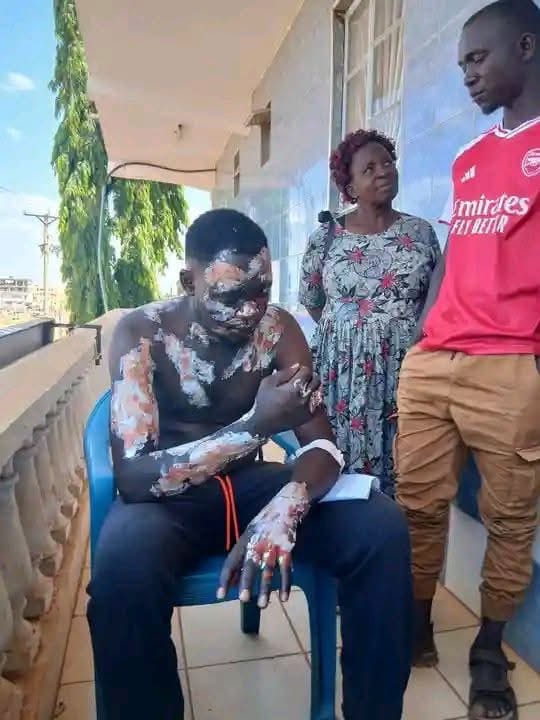
A Kenyan matatu driver burnt by his wife is at the centre of growing calls for equal justice in cases of domestic violence. The story broke out of Busia County, close to the Luo Nyanza area, where the man drives along the busy Kisumu-Busia highway.
Reports say his wife, Mercy Odoyo, poured boiling water on him after spotting messages with a female friend. She got arrested but walked free on a 20,000 Kenyan shilling bail. Now, people are talking about how the system handles violence against men differently.
The whole thing started at home one evening. The driver came back from his shift, tired from dodging potholes and picking up passengers. His wife had been suspicious for a while. She checked his phone and found chats that looked like more than work talk.
In a fit of anger, she heated water and threw it on his face and body. He ended up with bad burns, the kind that need hospital time and maybe skin grafts. Photos circulating online show him bandaged up, looking in real pain.
Mercy Odoyo works as an actress, according to some posts, and folks say the female colleague was actually one of her close friends. That added fuel to the fire, no pun intended.
Local officials jumped in quick. Geoffrey Mosiria, a Nairobi county enforcement officer, put out a statement calling it straight-up criminal. He said no one should get away with hurting someone like that, no matter the reason.
Then there’s Hanna Wendot Cheptumo, the Gender Cabinet Secretary. Her office is working with health services to make sure the driver gets proper care. They’re also pushing for the wife to face the full weight of the law.
Cheptumo’s team confirmed they’re coordinating with police in Busia to keep things moving. It’s good to see action, but some wonder if it’d be the same if roles were reversed.
Online, the reaction has been mixed but loud. On social media, especially Facebook groups where Kenyans share news, people are sharing the story with comments about double standards. One post described it as a “lethal face painting”, trying to make light but really highlighting the horror.
Guys are saying if a man did this to his wife, he’d be locked up for good, with no bail in sight. Women are chiming in too, some defending the wife by saying cheating hurts deep, others calling for fairness. It’s sparked talks about gender-based violence that hits men.
In Kenya, we hear a lot about women facing abuse, and that’s real, but stories like this remind us men can be victims too. Groups like the Kenya Human Rights Commission have tracked cases, though they focus more on police killings and such.
This isn’t the first time domestic fights have turned ugly in matatu circles. Drivers work long hours, away from home, dealing with stress from traffic cops and low pay. Marriages suffer.
Remember that case a few years back where a conductor got jailed for life after a passenger died in a scuffle? Not the same, but it shows how justice can swing hard sometimes. Here in Busia, near the border, life moves fast. People cross to Uganda for trade, and matatus are lifelines. But when home life boils over, it affects everyone. The driver’s colleagues probably had to cover his route, leaving passengers waiting longer.
Broader picture, Kenya’s dealing with rising domestic violence reports. The government passed laws like the Protection Against Domestic Violence Act back in 2015, but enforcement varies. In rural spots like Busia, cultural views sometimes downplay men’s pain.
Men are expected to tough it out. That’s why this case stands out. Activists want more awareness campaigns that cover both sides. Cheptumo’s ministry has programmes for survivors, including counselling and legal aid. If the driver taps into that, it could help him heal and maybe set an example.
Public calls for justice keep growing. Some online users want the bail revoked, arguing it’s too low for such harm. Others point out how media covers these stories unevenly. If it was a woman burnt, headlines would scream louder, they say.
Fair point. We need balanced reporting to build trust. Police in Busia say the investigation continues, with statements from neighbours and the hospital. Mercy Odoyo hasn’t spoken publicly yet, at least not that we’ve seen. Her side might come out in court.
In the end, this is about one man’s suffering and a system’s test. Will justice feel equal? The driver needs support now, from medical bills to emotional help. If you’re in Kenya and see this, think about how we handle anger at home.
Talk it out; get help early. Stories like this push us to do better as a society. Updates might come soon as the case moves forward. For now, the driver recovers, and the debate rages on.
Related Posts

Charlene Ruto Traditional Wedding with Husband Isaya Yunge
Tanzanian internet entrepreneur Isaya Yunge stands ready to join First Daughter Charlene Ruto in a landmark traditional ceremony this Saturday, August 8, 2026, at the…

Charlene Ruto Prepares for Dowry Koito Ceremony: Who is the Husband?
President William Ruto’s daughter Charlene Ruto steps into a major life moment as her Koito ceremony draws near at the family farm in Kilgoris this…

Arrow Bwoy Backlash On Nadia Mukami Side Chick Claim, Ntazola Questions
Arrow Bwoy stirred massive backlash after he publicly described Nadia Mukami as his former side chick during a recent interview. Critics slammed him hard for…

Popular Eldoret Sex Workers Reveal Dark Kalenjin Encounters ‘Niliekwa Missionary Kwa Matope…
A woman who lived in Eldoret for a decade opened up about terrifying nights with certain clients. Sex workers there shared raw stories of betrayal…