
Muslim Content Creator in Hijab Sparks Buzz Globally With Viral Videos
 Ibrahim Mohamed — March 17, 2026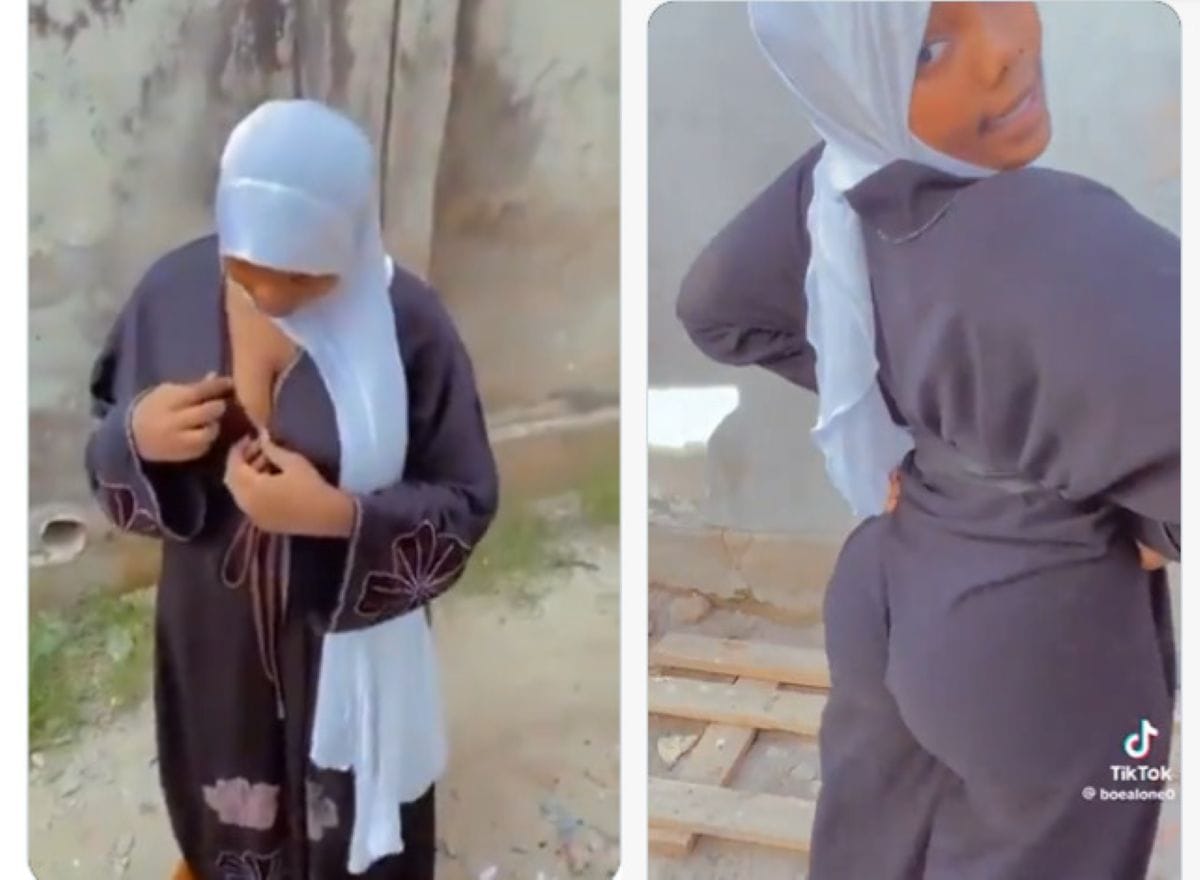
A Muslim woman in a hijab sparks outrage with viral videos, and the clips have set off a storm of criticism that has spread far beyond Kenya and Africa. The woman who appears in the footage wearing a headscarf has posted content that many people online say does not match the modest image her clothing suggests. Another video showing in a suggestive position.
The videos show her moving in ways that some viewers find too bold or suggestive, especially during the holy month of Ramadan when expectations around behaviour run high. Watch the video here.
The Muslim woman is being criticised worldwide for her online content, and her videos quickly racked up hundreds of thousands of views with thousands of replies pouring in from every corner.
Viewers of the videos promptly expressed their opinions. Many Muslims pointed out that wearing a hijab comes with certain responsibilities, and they felt her dance moves or poses crossed a line that made the whole thing look disrespectful.
Some comments called the content haram and said it was especially troubling right now when the community focuses on prayer and self-control.
Others went further and questioned whether she is truly a Muslim at all, noting details like waist beads and artificial nails that they believe do not fit traditional practices.
One reply clearly stated that her attire does not automatically qualify her as a faithful individual and that judging solely based on appearance overlooks the broader context.
The debate split fast, with some users defending her right to post whatever she wants and telling critics to simply scroll past if they do not like it.
Supporters argue that personal expression should not be policed so harshly and that women in hijab still deserve space to be themselves without every move being judged.
They say the attacks feel one-sided and that plenty of non-Muslim women post similar content without the same level of outrage. Critics on the other side insist the hijab sends a message of modesty and that posting anything that contradicts that message confuses young viewers or damages the image of the faith.
The back and forth has turned into a bigger talk about identity, culture and what it means to represent a religion in the age of quick videos and global audiences.
The video itself runs short, but its impact has lasted days with people stitching reactions, remixing clips and debating in comment sections long after the original post went live.
Others even suggested the woman might be using the controversy to gain more followers, which added another layer to the already heated exchange.
The story has travelled well beyond Africa, with comments coming in from the Middle East, Europe and parts of Asia, where similar discussions about modest dressing and online behaviour pop up often.
Some international viewers said they understood the frustration because they have seen parallel cases in their communities. Others called for more tolerance, reminding everyone that personal faith is between the individual and God and that public shaming rarely changes hearts.
The entire situation serves as a reminder that online content spreads rapidly, and reactions can come from all directions, particularly when religion and personal style intersect in unexpected or offensive ways.
They say the pressure to stay authentic while meeting community expectations can feel heavy at times. The woman’s case has ignited renewed discussions in group chats and family homes about the delicate balance between self-expression and cultural responsibility.
Some parents have used this time to talk to their daughters about the power of images and their quick misinterpretation.
In the end the clips have done what viral content often does; they started a discussion that reaches far beyond the original poster and keeps people talking long after the music stops.
A Muslim woman in a hijab sparks outrage with viral videos, and the story has captured attention because it touches on issues many families and communities wrestle with every day.
Kenyans and others around the globe continue to share their views, with some calling for understanding and others holding firm to traditional standards. The coming days will likely bring more voices into the mix as the video keeps circulating and the debate finds new angles.
Related Posts

Prophet Kanyari Introduces Marion Naipei Husband to Church Members
Prophet Victor Kanyari presented Marion Naipei’s husband before packed church members at Salvation and Healing Ministry in Nairobi on 9 August 2026. The move confirmed…

Jina Liko Na Bank! Baba Levo Refuses Diamond-Zuchu Baby Name Reveal
Baba Levo spoke out recently in Tanzania and made clear he will stay silent on the child of the famous couple. The comedian explained that…

Charlene Ruto Traditional Wedding with Husband Isaya Yunge
Tanzanian internet entrepreneur Isaya Yunge stands ready to join First Daughter Charlene Ruto in a landmark traditional ceremony this Saturday, August 8, 2026, at the…

Charlene Ruto Prepares for Dowry Koito Ceremony: Who is the Husband?
President William Ruto’s daughter Charlene Ruto steps into a major life moment as her Koito ceremony draws near at the family farm in Kilgoris this…