
President Ruto to Unveil New Kenya Police Uniforms on Friday

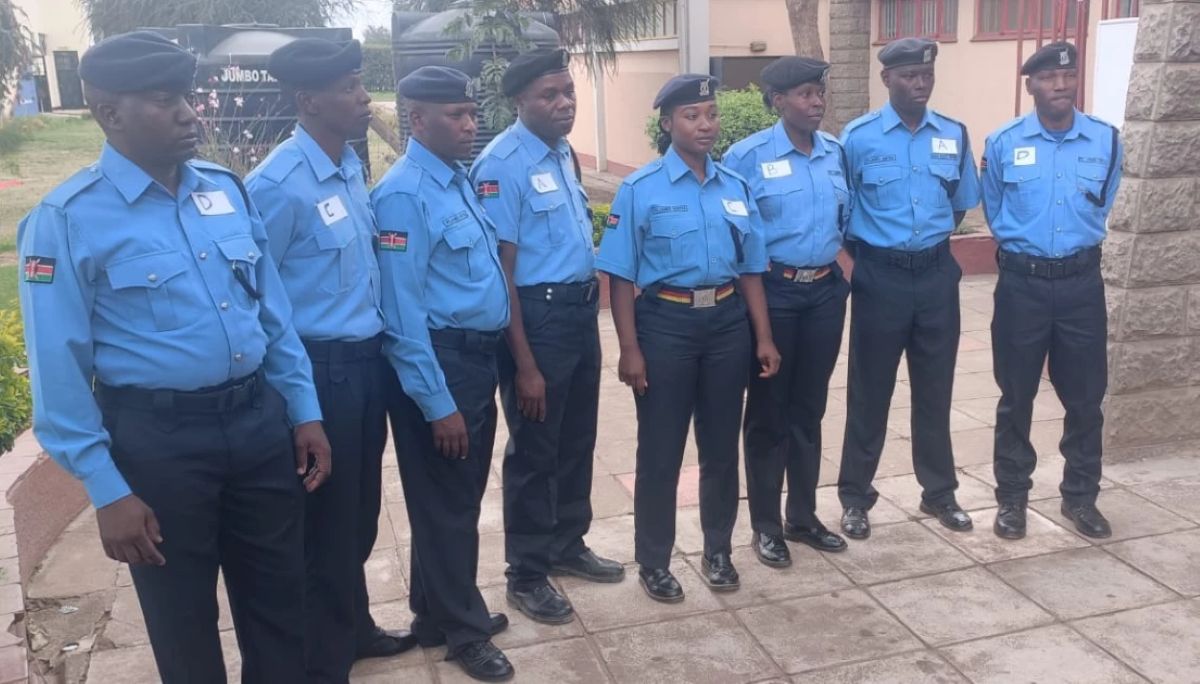
William Ruto heads to Kiganjo Police College in Nyeri County this Friday to present the updated attire. The ceremony highlights new police uniforms for general duty members across the force. Officers will start using them from the following Monday. Officials want to raise spirits and improve daily work after listening to rank-and-file input.
Crowds already gather near the gates of the training ground. Dust rises from the paths as vehicles pull in. The president arrives under clear skies that stretch over the surrounding hills.
He steps forward to show the fresh designs himself. Staff at the college prepared the grounds with rows of chairs and flags snapping in the breeze. Local residents watch from nearby roads and talk among themselves about the sight.
Ruto takes centre stage at the event. He holds up samples of the cloth and cuts for everyone to see. The move comes after weeks of quiet planning inside security offices. Douglas Kanja, the current inspector general, joins him on the platform.
Kanja plans to wear the set himself starting next week. He told those present that the update grew straight from comments shared by officers on the ground. Only general duty recruits receive the first batch. Other specialised units keep the clothes they already own for now.
The decision aims to lift everyday energy among the ranks. Better-looking gear can help officers feel proud as they walk the streets and handle calls. Service delivery stands as the second goal. Leaders hope the change will show the public a sharper and more ready force.
Yet voices across towns push back hard. People ask why new clothes come before radios that work or vehicles that start every morning. Some point to reports of rough handling during arrests and demand real shifts in how power gets used. A few even whisper that supply contracts may drive the whole effort more than any real need.
Friday marks the official reveal day. The campus at Kiganjo fills with recruits standing at attention. Their boots shine against the packed earth. Instructors bark short orders while the main guest moves along the lines. Sensory details fill the air.
The smell of polished leather mixes with fresh paint on nearby buildings. Birds call from the trees that ring the parade ground. Kenya watches the moment through phones and radios as word spreads from Nyeri outward.
Why Are New Police Uniforms Being Introduced in Kenya?
Officials introduce the change to raise officer morale and sharpen daily service after collecting direct feedback from the ranks.
Kanja explained the process in plain terms during the gathering. He said the force listened to what men and women in uniform asked for over recent months. General duty staff go first because they form the largest group and meet the public most often.
Other branches wait their turn so the rollout stays orderly. The inspector general stressed that the new look carries practical updates too. Fabric choices and cuts came from what officers described as more comfortable for long shifts in heat or rain. He added that he himself will step out in the gear next week to set the example.
When Do General Duty Officers Start Wearing the New Uniforms?
General duty officers begin wearing the updated sets from Monday right after the Friday presentation.
The timeline stays tight. After Ruto finishes the formal show on Friday, the distribution teams move into action over the weekend. By Monday morning the first groups report for duty in the revised gear. Kanja confirmed the schedule while standing beside the displays.
He said the college will hand out sets to current trainees and selected stations first. The rest of the general duty roster follows in waves so supply chains do not break. Specialised units such as traffic or anti-stock theft keep their present clothes until later phases begin.
Context around the choice runs deeper than cloth alone. The force has faced steady pressure to improve how it meets citizens. Calls for stronger equipment and clearer rules against excess force echo in parliament sessions and community meetings. Some citizens suspect the timing links to contracts for fabric and tailoring.
They want open books on costs and suppliers. Others see the step as a small but visible signal that leadership hears the people inside the ranks. A retired sergeant who trained at the same college years ago shared his view while leaning on a fence outside. He said a clean uniform once made him stand taller on patrol, yet the real test remains how officers treat those they meet.
The hills around Nyeri hold the story in quiet layers. Students at the college practise drills that mix old habits with the coming change. Instructors remind them that appearance forms only one part of the job.
Related Posts
Wetangula Exposes How Ruto Hands TSC Letters at State House
National Assembly Speaker Moses Wetangula last week publicly condemned members of parliament who demand up to four hundred thousand shillings from struggling parents in exchange…
President Ruto to Unveil New Kenya Police Uniforms on Friday
William Ruto heads to Kiganjo Police College in Nyeri County this Friday to present the updated attire. The ceremony highlights new police uniforms for general…
Ukambani MP Tells Canada NGO to Return Boreholes to Canada
In the Mwingi Central constituency within Kitui County, MP Gideon Mulyungi recently addressed a gathering and warned Life Water Canada that the group must involve…

KCB’s Rosemary Koech Death Reveals Years of Marital Strife
Family members of KCB executive Rosemary Chemutai Koech Kimwatu point to her husband after police find her body in a Ngong house in Kajiado County…