
Ruto Demands Mandatory New Constitution for Vision 2060 Reforms

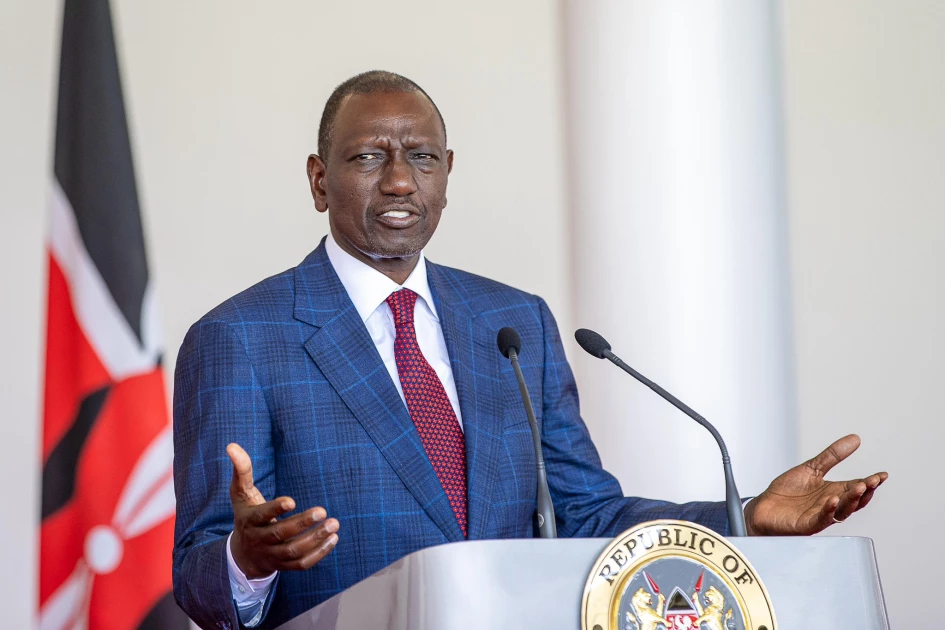
Kenyan President William Ruto told a national audience this week that the 2010 Constitution forces leaders to seek the people’s approval on major changes rather than treat consultation as optional, and he framed the current reform push as a binding duty that must happen across the country right now because the old top-down habits no longer hold.
He rejected any soft reading of the supreme law. “It is important that we engage in this exercise in the context of a new Constitution that does not request us to consult the people. No, it is mandatory,” he explained during a public address.
Ruto spoke at KICC as the government presses ahead with talks on governance and power sharing. He pointed straight at the 2010 Constitution, the document Kenyans fought hard to pass after years of struggle. That charter shifted power. It put the public at the centre. Leaders can no longer decide alone. The people must have their say. Ruto made that plain.
Why Does Ruto Call Public Consultation Mandatory Now?
The 2010 Constitution requires leaders to involve citizens in major national decisions rather than treat their input as a polite request. Ruto stressed this point to lock the current process into that legal frame and to block any return to closed-door deals. He reminded listeners that the old order allowed executives to move without asking.
The new order ends that practice. Every major step must be open to the public. Town halls. County forums. Direct feedback. The president framed the exercise as non-negotiable. He said the Constitution itself demands it. No loopholes. No half-measures.
The timing matters. Kenya faces ongoing pressure over how power is shared between the centre and the counties. Debates continue over resource distribution, security coordination, and the role of the National Assembly versus the Senate.
Ruto’s words place the entire conversation under the constitutional umbrella. He told the gathering that the law leaves no room for choice. Consultation is required. The people hold the final voice.
What Does the 2010 Constitution Actually Require From Leaders?
It mandates public participation in key processes and rejects any claim that consultation is merely advisory. Article after article builds this duty into the structure of government. Leaders must create space for citizens to speak.
They must record the input. They must show how it shapes the outcome. Ruto referenced this reality directly. He refused to treat the requirement as a suggestion. The Constitution, he said, makes it compulsory.
Kenyans remember the long road to that document. The 2007-2008 crisis left deep scars. Communities demanded a new order. The 2010 vote delivered it with strong support.
Since then courts have struck down several attempts to bypass public input. Ruto’s latest remarks align with those rulings. He placed the current reform talks inside that legal boundary. The process must stay open. Closed rooms no longer suffice.
Across the country the reaction mixed relief and scepticism. In Kisumu traders paused mid-sale to discuss the speech. In Mombasa residents gathered at tea stalls and repeated the key line. In Eldoret farmers listened on the radio and nodded.
Many said the words matched what the Constitution already states. Others asked whether the government will match the rhetoric with real open forums. Ruto offered no timeline for the next round of meetings. He simply locked the principle in place.
The president’s language stayed direct. He rejected any reading that treats public voice as optional. The Constitution, he insisted, orders leaders to engage. The people must take part. That duty applies to the present exercise.
It applies to every future one. Ruto framed the moment as a test of fidelity to the supreme law. Leaders who skip the people violate the charter. He left no ambiguity.
He grounded the demand in the lived experience of the 2010 shift. Before that year, presidents could move with limited input. After that year, the people gained a formal place at the table.
Ruto refused to return to the earlier style. He told the audience the new order leaves no choice. Engage. Listen. Act with the public in view. The Constitution demands it.
The speech adds pressure on the reform process itself. Any proposal that reaches the National Assembly or the Senate will face questions about how thoroughly citizens shaped it. Ruto’s words raise the bar.
Officials must show the consultation trail. They must document the meetings. They must prove the input mattered. The president set that standard in public.
Related Posts
Ruto Demands Mandatory New Constitution for Vision 2060 Reforms
Kenyan President William Ruto told a national audience this week that the 2010 Constitution forces leaders to seek the people’s approval on major changes rather…
After Claims 2024 Gen Z Were From Illuminati, MP Kagombe Quits UDA
Gatundu South lawmaker Gabriel Kagombe walks away from the United Democratic Alliance this week as he eyes a fresh vehicle in Kenya’s mountain region. The…
Bumula MP Wamboka Criticizes Wetangula’s Uhuru Exit Call
Bumula MP Jack Wamboka yesterday rejected Speaker Moses Wetangula demands that former president Uhuru Kenyatta leave active politics. The lawmaker spoke in Bungoma County and…
New Emurua Dikirr MP David Keter Outrage After Demeaning Woman
Recently elected Emurua Dikirr MP David Keter sparked fierce public anger across Kenya when he publicly told a woman seeking assistance to sit down and…