
Kenya Police Bust Illegal Donkey Slaughter Operation in Juja

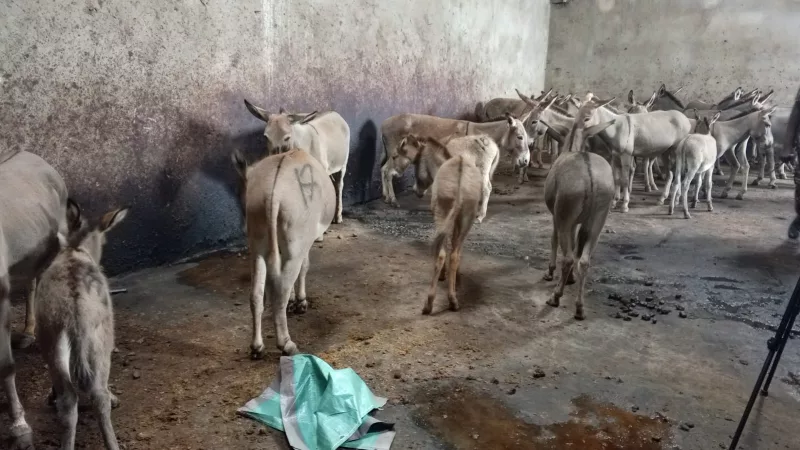
Police and multi-agency teams from national and county forces raided a warehouse in Kalimoni Ward, Juja Sub-County, Kiambu County, on Wednesday, September 23, 2026, following reports of dumped carcasses that pointed to illegal donkey slaughter operations supplying meat across the region and far beyond local markets.
Officers moved fast after locals spotted rotting remains scattered around Juja. The stench hung heavy in the air near Kalimoni Ward. Residents had grown tired of the mess. They alerted authorities who pieced together the pattern. Meat from these animals had likely reached plates in the area and farther out.
A multi-agency team from the National Police Service, National Government Administration Officers, and Kiambu County Government closed in on the gated compound. The space measured about 50 by 70 feet. Inside they found clear signs of ongoing work.
Thirty live donkeys of mixed ages stood crowded in a two-story building. The animals looked weak and hungry. Food had been scarce for them. Investigators believed the owners planned to kill them that same night. Blood-stained knives lay nearby. Stained clothing sat in piles. Sacks held slaughter waste.
Polythene bags matched those used to dump remains elsewhere. Waterproof paper bags suggested plans to pack the meat for sale. One jerrycan held sulphuric acid. Officials suspect the chemical masked odors from the waste and flesh.
No one stood at the site when the team arrived. A neighbor spoke to the officers. He said strange sounds usually rose from the compound at night about once each week. Police and county teams now hunt the owner and anyone tied to the trade.
Crime scene experts from Juja documented every detail. The 30 donkeys left the warehouse for a nearby private farm. There they receive food and care while officials decide their next steps. Monitoring continues across the area as the search for those responsible expands.
What Evidence Did Officers Recover From the Alleged Site?
Officers recovered blood-stained knives, clothing, sacks of waste, polythene bags, waterproof paper bags, and a jerrycan of sulphuric acid that pointed to active slaughter work.
The haul painted a clear picture of the operation. Knives still carried traces of recent use. Clothing bore the same marks. Waste filled the sacks in thick layers. Bags of both types matched reports of discarded remains across Juja. The acid stood out as a tool to hide the sharp smell that would otherwise draw attention.
Investigators treat every item as part of a larger chain. They process the scene with care to build a solid case. The neighbor account adds weight. Night activity once a week fits the rhythm of a hidden trade.
Authorities press forward to name the people behind it. The rescue of the live animals marks one early success. Their move to the private farm gives them safety while the probe runs.
How Has the Kenya Donkey Population Fallen Due to Trade Pressures?
Kenya donkey numbers dropped from 1.8 million in 2009 to 1.1 million in 2019 as criminal networks drove theft and illegal sales of hides and meat.
A recent study lays out the damage in stark terms. High demand from Asian markets fuels the pressure. Syndicates run secret slaughter sites and move products across borders. They skip veterinary checks and standard rules. Rural families lose an everyday work animal that once pulled carts and eased farm tasks.
Income vanishes with each stolen animal. The High Court ended a 2020 ban on slaughterhouses and opened legal sales of meat and hides. Yet the illegal side has grown more organized. Researchers urge joint work by government agencies, law enforcement, prosecutors, border teams, and civil groups.
They call for stronger laws, policies, and enforcement to break the networks. Without that step the decline may continue. The Juja raid shows the trade still operates in plain sight. Local dumps of carcasses first raised the alarm. Now the full picture emerges of a warehouse turned into a killing ground.
The bust hits at a moment when the population already sits under heavy strain. In Kenya every lost donkey hits households hard. Police action in Juja sends a signal. The illegal side of the trade will face more pressure.
Officers keep watch on the ward and surrounding spots. They seek the proprietor and any partners. The sulphuric acid find adds a chemical angle to the case. Waste bags link directly to the earlier dumps.
Live animals rescued from starvation show the conditions they faced. County and national teams share the load. Their joint presence at the gate proved decisive. The private farm now holds the herd in better shape. Feeding begins at once. Safety comes first while longer plans form.
Demand for hides drives much of the crime. Meat fills local gaps when supply runs short. The operation in Juja mixed both aims. Night work kept it quiet until the dumps gave it away.
Residents noticed the pattern and spoke up. Their reports triggered the intelligence that led the team inside. The gated compound offered cover but not enough. Once inside, the evidence stacked up fast. Knives, tools, bags, and acid left little room for doubt.
The empty site at the moment of entry means the hunt continues. Identification efforts target the owner and helpers. Documentation by Juja crime scene staff locks in the details for court use later. and each day.
Related Posts
Kenya Police Bust Illegal Donkey Slaughter Operation in Juja
Police and multi-agency teams from national and county forces raided a warehouse in Kalimoni Ward, Juja Sub-County, Kiambu County, on Wednesday, September 23, 2026, following…

Kericho Aspirant Cheptoo Shaz Langat Dives to Muddy River to Retrieve Body
In Kapsoit Ward residents watched as Cheptoo Shaz Langat, the Kericho aspirant, dives river currents on 22 September 2026 to retrieve an unidentified body found…

Main Satan Agent From Bungoma Warns Pastor Ezekiel
A determined man from Bungoma County stood firm by the crashing waves of the Indian Ocean late on September 21, 2026, and boldly claimed the…

Kenyans Scammed Millions by Unlicensed QVSE Trading Platform
Many Kenyans, especially teachers, poured savings into promises of quick stock profits. Kenyans Scammed by Unlicensed QVSE Trading Platform (Quant Vest Stock Exchange (QVSE) faced…