

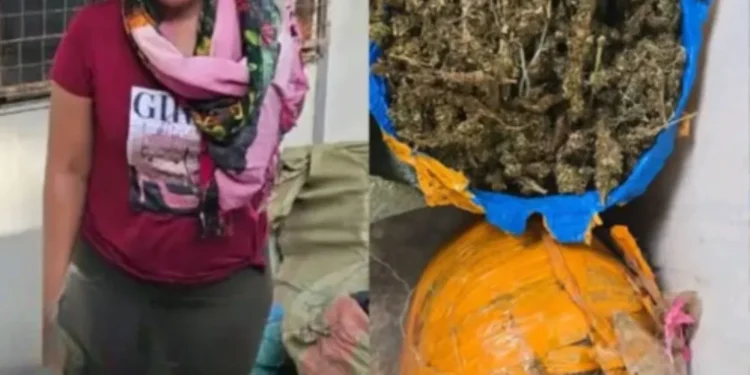
Authorities in Kenya have arrested a woman in Diani with high-quality marijuana, sparking fresh discussions about drug laws in the country. The suspect, 36-year-old Hellen Saru Mwajombo, was taken into custody during a joint operation by detectives in Kwale County. Police say she had two large bags filled with rolls of cannabis, and more was found at her home nearby. This bust happened just days ago, and it’s got people talking again about whether Kenya should rethink its stance on marijuana.
The arrest went down in Diani, a coastal town known for its beaches and tourism. A multi-agency team, including officers from the Directorate of Criminal Investigations, acted on a tip. They stopped Mwajombo and found the bags in her possession. She then led them to her house, where they uncovered even more cannabis stashed away. They also seized a vehicle they think was used for moving the drugs. Mwajombo is now facing charges under Kenya’s Narcotic Drugs and Psychotropic Substances Control Act, which treats marijuana as an illegal substance. Officials haven’t released the exact amount, but reports describe it as a significant haul, pointing to her as a possible key player in local supply chains.
Diani sits in Kwale County, south of Mombasa, and it’s no stranger to drug busts. Last year, in September 2025, three people, including two Germans, were nabbed there for growing marijuana on a plot of land. That case involved over an acre used for cultivation. These incidents highlight how the area, with its mix of locals and tourists, sometimes sees drug activity. Police say they’re stepping up efforts to crack down, especially with tourism being big for the economy.
Right after news of Mwajombo’s arrest spread, some Kenyans online started pushing harder for marijuana legalisation. Social media posts argue it’s time to decriminalise it, pointing to health benefits like pain relief for certain conditions. Others talk about economic upsides, like farming it for export or creating jobs in processing. It’s not new talk, but this arrest lit the fuse again. One user on Facebook shared, “Why arrest people when we could regulate and benefit?” Though there’s no big wave from this specific case, the chatter ties into ongoing debates.
In Kenya, marijuana, or ‘bhang’, as locals call it, remains illegal. Possession can land you up to 10 years in jail or a hefty fine. The 1994 law lumps it with harder drugs, with no room for medical or recreational use. But voices for change are growing. The Rastafari Society of Kenya has a court case coming up this month, on January 14 and 15, 2026, at Milimani Law Courts in Nairobi. They’re arguing for religious freedom, saying cannabis is part of their faith. A judgement might come in March 2026. If it goes their way, it could open doors wider.
Politicians have chimed in too. Mumias East MP Peter Salasya recently called for controlled legalisation, saying unregulated stuff on the streets is risky for youth. He wants categories for different types, like in some U.S. states, to keep things safe. Back in the 2022 election, George Wajackoyah ran for president on a platform heavy on marijuana reform. He promised to legalise it to pay off national debt, electrifying young voters, though he didn’t win. Wajackoyah argued it could boost farming in places like Kisii or Nyeri, where soil suits hemp growth.
Looking across Africa, Kenya lags behind some neighbours. South Africa decriminalised private use in 2018 and now has a growing cannabis industry. Lesotho legalised medical marijuana in 2017, attracting investors for exports. Countries like Morocco and Zimbabwe allow it for medicine or industry. In Kenya, experts say legalising could add millions to the GDP through taxes and jobs. A 2023 workshop in Nairobi discussed how it ties to livelihoods, warning that without reform, benefits might go only to the rich.
Opponents worry about health risks. A recent report from Aga Khan University called for high taxes on cannabis if legalised, to curb misuse among youth. They point to rising use, with one in 37 Kenyans aged 15-24 trying it, per a 2022 NACADA survey. Gen Z is normalising it through matatu art and music, but that clashes with strict laws.
For now, Mwajombo awaits court. Her case might fade, but the bigger conversation won’t. Groups like CAPMHK have online petitions for decriminalisation, focusing on personal use. In coastal spots like Diani or Mombasa, where tourism mixes with local life, enforcement stays tough. Police vow more operations.
This arrest shows Kenya’s crossroads on marijuana. With court dates looming and MPs speaking up, 2026 could see shifts. Until then, users risk jail, while advocates push for change.