
Mudavadi Warns of Potential 2027 Election Crisis in Kenya, Calls for Referendum
 Adhis Okena — December 26, 2025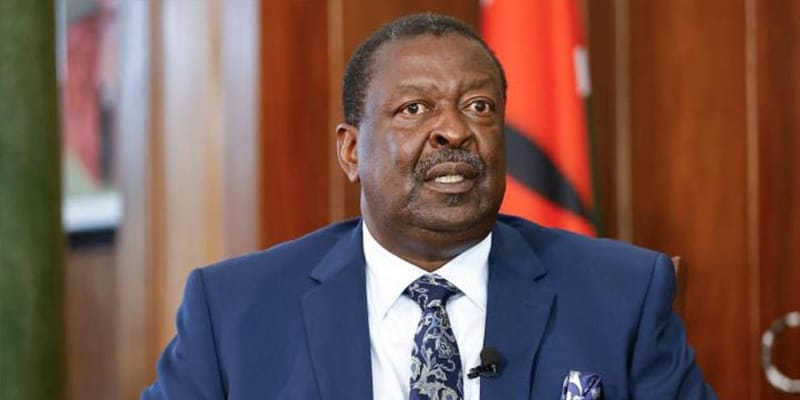
Kenya’s Prime Cabinet Secretary Musalia Mudavadi has raised serious concerns about the upcoming 2027 general election. He says the vote could face major legal challenges or even get nullified if the country does not hold a constitutional referendum at the same time.
Mudavadi spoke out recently, pointing to problems with how electoral boundaries are handled. The 2010 Constitution requires the Independent Electoral and Boundaries Commission (IEBC) to review constituency and ward boundaries every eight to 12 years.
The last full review happened back in 2012. The deadline for the next one passed in March 2024, and nothing has been done yet.
One big issue is the population data. The IEBC needs accurate census figures to redraw boundaries fairly. But the 2019 census ran into trouble. Courts nullified the results in northern counties like Mandera, Wajir, and Garissa because of reported irregularities.
A mini-census for those areas is planned, but it won’t finish until January 2026. That leaves little time before the 2027 polls.
Mudavadi explained that without proper boundaries based on up-to-date numbers, the election could break constitutional rules. Kenya’s population has grown a lot since 2010, but the Constitution caps constituencies at 290.
Some areas with fast growth deserve more seats, while others might not meet the minimum population quota. Using outdated or mixed data could lead to court cases that stop the election before it starts.
He suggested holding a referendum on the same day as the general election in August 2027. Voters would get six ballots for president, governors, senators, MPs, women representatives, and county assembly members. A seventh ballot could ask yes-or-no questions on constitutional changes.
This idea would fix several stuck issues. For example, it could implement parts of the National Dialogue Committee (NADCO) report from talks between President William Ruto and opposition leader Raila Odinga. That includes making roles like Prime Minister and Leader of the Official Opposition official in the Constitution. The goal is to make government more inclusive so people from all regions feel represented.
Other changes could protect funding for things like the National Government Constituency Development Fund (NG-CDF), which helps with local projects and school bursaries. There could also be new funds for senate oversight or ward-level development to get money directly to communities for basics like water points.
Mudavadi thinks combining the referendum with the election makes sense. It would save money compared to a separate vote. Kenyans already handle multiple ballots, so adding a few clear questions should not be a problem. It might even boost turnout, as people vote on big national matters alongside choosing leaders.
Not everyone agrees right away. Some politicians, like Moses Kuria, support it and say it is time to update the Constitution after 15 years. But others worry it could divide people or be seen as a way to grab more power, especially with economic hardships like high living costs. Many Kenyans want the government to focus on cutting spending and creating jobs instead of constitutional debates.
Still, Mudavadi insists this is about legal fixes, not politics. He calls it a “constitutional moment” to avoid a crisis. With only about 20 months left until 2027, he wants discussions to start soon, maybe in 2026, so questions are ready and fair.
This proposal has started talks across Kenya. It could shape how the country handles representation and governance for years. For now, it puts pressure on leaders to decide if a referendum is the way to keep the 2027 election smooth and lawful.
Related Posts
After Claims 2024 Gen Z Were From Illuminati, MP Kagombe Quits UDA
Gatundu South lawmaker Gabriel Kagombe walks away from the United Democratic Alliance this week as he eyes a fresh vehicle in Kenya’s mountain region. The…
Bumula MP Wamboka Criticizes Wetangula’s Uhuru Exit Call
Bumula MP Jack Wamboka yesterday rejected Speaker Moses Wetangula demands that former president Uhuru Kenyatta leave active politics. The lawmaker spoke in Bungoma County and…
New Emurua Dikirr MP David Keter Outrage After Demeaning Woman
Recently elected Emurua Dikirr MP David Keter sparked fierce public anger across Kenya when he publicly told a woman seeking assistance to sit down and…
Kenyans Drink More Soda as Mbadi Claims Ruto Economy Success
Treasury Cabinet Secretary John Mbadi told a gathering in Kenya on Tuesday, 11 August 2026, that rising soda intake proves citizens now hold extra cash…