
Ruto: I do construction daily, I break the existing, construct another


President William Ruto’s construction habit farm-breaking quote drew laughter and raised eyebrows during a public address in Lodwar when he revealed his personal passion for building projects extends to demolishing existing structures on his property just to create new ones.
Speaking at the gathering, the head of state shared a light-hearted anecdote about his private farm activities. “I do construction everywhere; if you go to my farm, sometimes when there is nothing to construct, I break the one that is there so I can construct another one,” Ruto told the amused crowd, illustrating his deep love for development work that began long before entering politics.
Attendees erupted in applause and chuckles, interpreting the remark as relatable proof of the president’s hands-on approach to progress. Many saw it as a metaphor for his administration’s aggressive push on infrastructure nationwide, from roads and dams to markets and housing units that often involve clearing old facilities for modern replacements.
Supporters quickly embraced the quote on social media, turning it into memes celebrating Ruto’s builder mentality inherited from his early days selling chickens and later venturing into real estate.
Youth groups in Rift Valley hailed it as inspiration for embracing constant improvement, even if it means starting over on familiar ground.
Critics, however, seized on the statement to question priorities amid economic hardships. Opposition voices argued that breaking functional structures for new ones mirrors perceived wasteful spending on mega projects while basic services lag in some areas. They called for focus on maintaining existing assets rather than perpetual new constructions.
Development experts offered balanced views, noting controlled demolition forms part of urban renewal globally when old buildings no longer meet safety or efficiency standards. They cited examples like upgrading rural schools or bridges where replacement outperforms endless repairs.
Ruto’s personal farm in Sugoi has long been a showcase of his construction enthusiasm, featuring modern dairy units, greenhouses, and residences built over years. Visitors describe it as evolving constantly, reflecting the president’s preference for tangible progress visible in landscaping and facilities.
The anecdote resonated with contractors and engineers present, who shared stories of clients insisting on redesigns mid-project. Industry players see the president’s passion as a positive signal for continued government contracts in the building sector that employs thousands.
Community leaders in Turkana appreciated the humour and used the moment to request more local projects, like tarmacing feeder roads and expanding health centres. Ruto responded by pledging support for ongoing initiatives, including water pans and electricity connections.
For ordinary citizens, the revelation humanised the presidency, showing a leader who practices what he preaches about development even in private life. Hustlers identified with the drive to keep improving surroundings despite challenges.
The president’s ‘construction habit’ farm-breaking quote thus captured both admiration and critique, encapsulating debates on Kenya’s rapid transformation under his leadership. Whether viewed as an endearing quirk or a policy insight, it underscored Ruto’s identity as a builder at heart, from personal farm to national stage.
Local artisans hoped the passion translates to more opportunities for small-scale contractors often sidelined in big tenders. Women’s groups running table banking schemes joked about applying the mindset to upgrading their enterprises.
As Kenya pursues ambitious infrastructure goals, Ruto’s personal story reinforces commitment to physical progress that changes landscapes and lives. The farm anecdote, delivered with characteristic candour, reminded audiences that development drive starts with an individual mindset ready to rebuild when necessary.
The president now preaches national building, literal and figurative, as the audience discusses how to channel similar energy into community projects. For many, the president’s words became a motivational mantra for embracing change through constructive action.
Related Posts
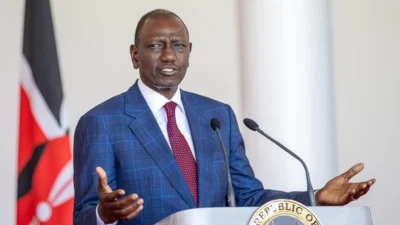
Ruto Demands Mandatory New Constitution for Vision 2060 Reforms
Kenyan President William Ruto told a national audience this week that the 2010 Constitution forces leaders to seek the people’s approval on major changes rather…
After Claims 2024 Gen Z Were From Illuminati, MP Kagombe Quits UDA
Gatundu South lawmaker Gabriel Kagombe walks away from the United Democratic Alliance this week as he eyes a fresh vehicle in Kenya’s mountain region. The…
Bumula MP Wamboka Criticizes Wetangula’s Uhuru Exit Call
Bumula MP Jack Wamboka yesterday rejected Speaker Moses Wetangula demands that former president Uhuru Kenyatta leave active politics. The lawmaker spoke in Bungoma County and…
New Emurua Dikirr MP David Keter Outrage After Demeaning Woman
Recently elected Emurua Dikirr MP David Keter sparked fierce public anger across Kenya when he publicly told a woman seeking assistance to sit down and…