
Elon Musk Says His Massive Tax Payment Crashed IRS System


Elon Musk kicked off the new year with a claim that’s got people talking about taxes again. On January 1, 2026, he posted on X that his massive tax payment once crashed the IRS system because it had too many digits. He said the agency had to update its software just to process it. This came as a reply to a chart showing how the top earners foot most of the federal income tax bill.
Musk has a history of big tax payments tied to his wealth from companies like Tesla and SpaceX. Back in 2021, he sold a bunch of Tesla stock and ended up paying over $11 billion in federal taxes that year alone. That’s the largest amount any single person has paid in U.S. history for one year, based on what he’s shared publicly.
Records from later years show he paid around $12 billion in 2021 and more than $8 billion in 2022, adding up to over $20 billion in recent years. The IRS hasn’t officially commented on whether his payment really caused a system crash, but Musk insists it did.
The post quickly stirred up debates online and in the media. Some folks praised it as proof that wealthy people like Musk are already carrying a heavy load when it comes to funding the government.
The chart he quoted pointed out that the top 5% of taxpayers covered about 70% of federal income taxes in 2021, while the bottom half paid almost nothing. Supporters say this shows the system is progressive enough, with high earners contributing the most.
But not everyone sees it that way. Critics brought up how Musk’s companies have benefited from billions in government subsidies and contracts. Tesla, for example, has received tax credits and incentives for electric vehicles, and SpaceX has landed huge NASA deals.
One estimate puts the total government support for his businesses at around $38 billion over the years. They argue that while Musk pays a lot in personal taxes, especially from stock sales, his companies sometimes pay little or no federal corporate taxes despite big profits.
Take Tesla as an example. In recent reports, the company made $2 billion in U.S. profits one year but reported zero federal income tax. Over three years, Tesla earned $10.8 billion domestically but paid just $48 million in current federal taxes.
This happens because of deductions, credits for research and development, and losses carried over from earlier years. Musk has defended this by saying Tesla has paid billions in other taxes, like payroll and sales taxes, and that the company invests heavily in growth.
Going back further, ProPublica reported in 2021 that Musk paid no federal income tax in 2018. That was due to how the tax code handles unrealised gains—meaning stock value increases that aren’t cashed out yet. Musk doesn’t take a salary from Tesla, so his income comes mostly from exercising stock options, which triggers taxes only when sold.
This latest comment from Musk comes at an interesting time. He’s now involved in the Department of Government Efficiency, or DOGE, a task force aimed at cutting federal spending.
Recently, there have been reports that his team gained access to sensitive Treasury systems, including IRS data for things like Social Security payments. The White House says this doesn’t mean they’re peeking at private tax returns, but it’s raised questions about privacy and conflicts of interest, given Musk’s own history with the IRS.
People on X reacted fast to his post. Some shared memes about the IRS struggling with big numbers, while others pointed out broader issues like the Pentagon failing its eighth audit in a row, unable to account for trillions in assets.
One user noted how the IRS tracks small payments over $600 on apps like Venmo, yet big government departments get a pass on massive discrepancies.
Musk’s story highlights ongoing talks about tax reform. With wealth concentrated among a few, like the top 1% holding more assets than ever, there’s pressure to change how capital gains and corporate profits are taxed. Proposals range from wealth taxes to closing loopholes that let companies defer payments.
Still, Musk’s payments show the flip side. When billionaires do sell stock, the tax bite can be huge. In his case, that 2021 bill came from exercising options tied to Tesla’s soaring stock price. He even sold more shares later to cover taxes on those gains.
As the debate rolls on, Musk keeps weighing in. He once said on X that he’s paid more taxes than any American in history. Whether that’s true or not, his anecdotes, like the IRS crash, keep the spotlight on how the system handles extreme wealth.
For everyday taxpayers, this might feel distant. But it touches on fairness: should the rich pay more, or are they already doing enough? Musk’s post doesn’t settle that, but it sure gets people thinking.
Related Posts

Lumumba Vea Signs Rexona Deal at 2026 World Cup
Congolese superfan Lumumba Vea signs Rexona deals with the 2026 World Cup in Mexico after his motionless tribute pose captured global attention. The passionate supporter…

Doky Dorcas Sets New Guinness Record for Fastest Chapatis
Doky Dorcas claimed the title for the fastest chapatis when she whipped up three fresh ones in record time at Ongata Rongai on December 15,…
Ruto Fires Back at Gideon Moi Accusing Him of SG Media Headlines…
President William Ruto hit out sharply at Gideon Moi and Standard Media over what he calls daily extortion through headlines. The strong social media post…
Banking for Business Growth – Don’t Miss This Masterclass By Co-op Bank
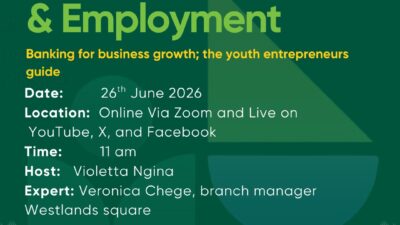
Starting and growing a business comes with many opportunities, but it also requires the right financial support to succeed.Join us this Friday as we explore…