
EU Fines Elon Musk’s X €45M Over Donald Duck Mix-Up
 Jen Susan — January 29, 2026
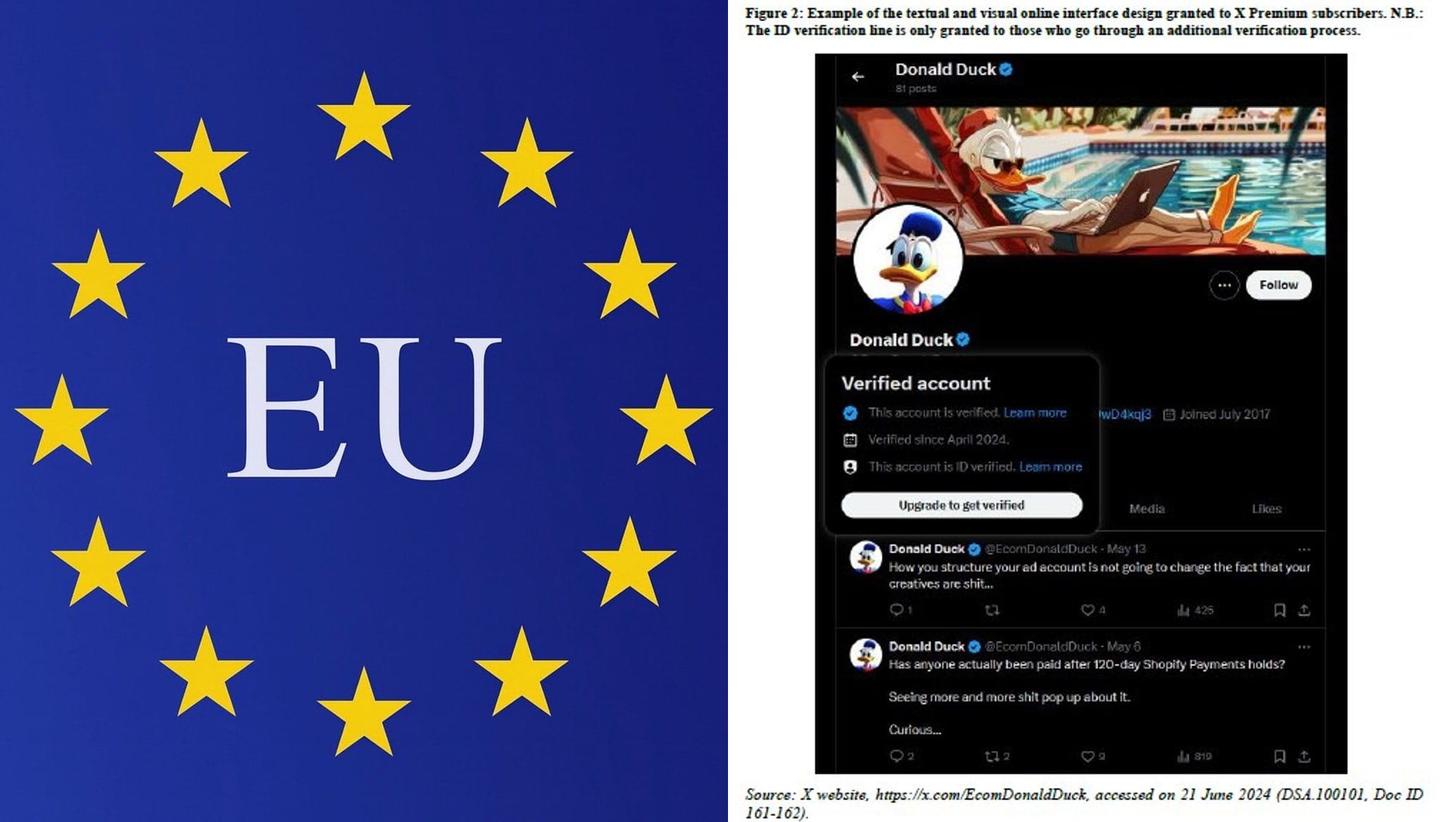
The European Union fined Elon Musk’s X €45 million for tricking users with its blue checkmark system, part of a bigger €120 million slap that has everyone from politicians to online commenters fired up. Regulators said the paid verification could fool people into believing a parody account like Donald Duck was the real deal, turning what used to be a trust signal into a potential mess.
The whole thing dropped back in December 2025, when the European Commission laid out their first big hit under the Digital Services Act. They broke it down like this: €45 million straight for the blue tick confusion, another €35 million because X didn’t keep ad records clear enough, and €40 million over blocking researchers from data.
That’s a hefty total, though still under the max 6% of the company’s worldwide earnings they could have gone for. Officials figured this amount fit the bill without going overboard.
At the heart of the blue check drama sits that little badge everyone knows. Before Musk took over Twitter and flipped it to X, the tick meant someone important or official had been checked out – no charge. Now it’s up for grabs if you pay about €7 a month for X Premium.
The EU argued this switch muddies the waters, making users think any verified account is legit when it might not be. They pointed to examples like high-profile fakes popping up right after the change, impersonating folks like Donald Trump or LeBron James. But the one that got tongues wagging?
A parody account called @EcomDonaldDuck getting the tick. In their 183-page ruling, commissioners worried this could lead people to believe “this fictional duck had come to life” and was posting as a genuine user. It’s a wild line that US Republicans latched onto, blasting the decision as overreach and sharing the full document to poke fun at Brussels.
Musk didn’t take it lying down. Through posts on X, he called the fine an attack on free speech, vowing to fight it in court. His team argued users know the score these days – the tick just shows you’re subscribed, not some stamp of approval.
But the EU wasn’t buying it. They said X kept the old look without the old safeguards, opening doors to scams, bots, and confusion that hurts everyday folks scrolling for news or chats.
On the ad side, X fell short by not letting users or watchdogs easily see who’s behind sponsored posts. That makes spotting fakes harder, especially around elections when bad info spreads quick. And for researchers? The platform locked them out of key stats like views and likes, breaking rules meant to help study how content flows and affects society.
Reactions came thick and fast. Over in the US, Vice President JD Vance jumped in before the ink dried, tweeting that the EU should back off American firms instead of hitting them with “censorious” laws.
He even threw shade at European leaders during a security talk in Munich. Republicans in Congress went further, releasing the full decision and mocking the Donald Duck bit as proof the whole thing’s ridiculous. They see it as Brussels meddling in free expression, especially since Musk turned X into a looser spot for opinions after buying it.
In Europe, some cheered the move as standing up to big tech. Former commissioner Thierry Breton, who kicked off the probe, had pushed hard for quicker action but critics noted the two-year wait built a solid case against expected appeals. X has already hinted at lawsuits, saying the rules are fuzzy and unfairly applied.
This isn’t X’s only headache with the DSA. Two more probes keep going – one on how they handle illegal stuff like hate speech, and another on algorithms that might push harmful content. Meanwhile, rivals like TikTok got a nod the same day for stepping up their ad transparency.
For regular users, it boils down to trust. That blue tick used to mean something solid; now it’s pay-to-play, and the EU says that’s risky. With over 100 million active folks in Europe alone, small mix-ups can snowball into big problems, like falling for scams or believing fake news from cartoon ducks.
As appeals loom, watch for more fireworks between Silicon Valley and Brussels. Tech giants face tighter reins in Europe, from Apple coughing up half a billion over app stores to Meta paying 200 million for antitrust slips.
Related Posts

Sony Ends Physical PlayStation Discs Starting January 2028
Sony Interactive Entertainment drops a major update that shakes the gaming world as PlayStation Digital Only takes over for all new titles from January 2028.…

Khalif Kairo Launches Uber for Plane Bookings in Kenya
Khalif Kairo just rolled out a sleek private plane booking platform that lets travellers in Kenya summon flights with a few taps on their phones.…

PUBG Mobile & Infinix Ignite Kenya Varsity Showdown With $1,000 Prize Pool…
Nairobi, Kenya – PUBG MOBILE and Infinix have officially announced the launch of the PUBG MOBILE Varsity Showdown (PMVS), a nationwide university esports tournament designed…
Nairobi PayPal Loading Scam BANS Hundreds of PayPal Accounts
The Nairobi PayPal loading scam has left hundreds of local accounts banned and their owners staring at huge negative balances they never expected. The trick…