
Google Can’t Sell House Searches Hit All-Time High
 Jen Susan — February 24, 2026
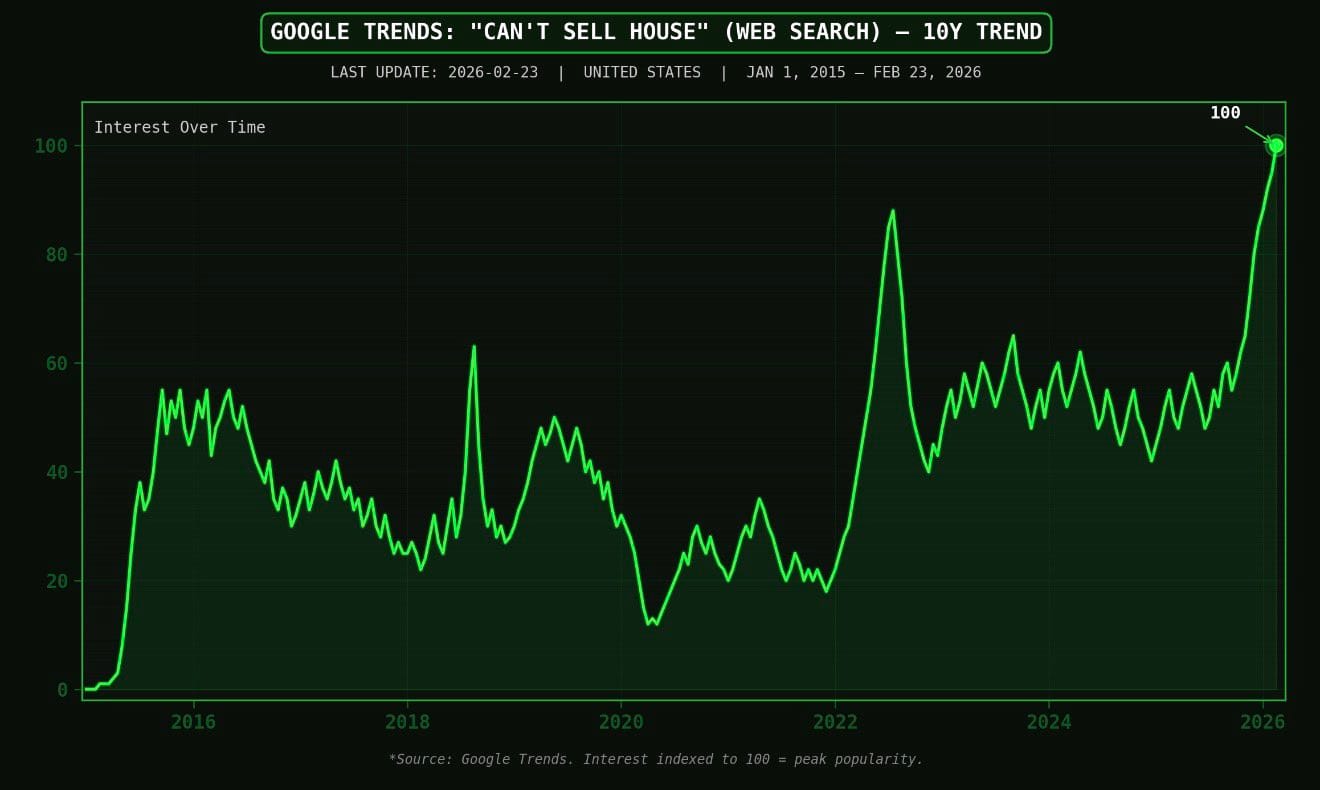
Google can’t sell houses; searches have just smashed every previous record, climbing higher than during the 2008 crash and the worst days of COVID. People across the country are typing those exact words into their phones and laptops more than ever before, and the spike has real estate agents, economists, and everyday homeowners paying close attention.
The numbers come straight from Google Trends data released this week. Searches for phrases like “can’t sell my house” or “why can’t I sell my house” jumped to levels no one has seen in over 15 years.
Back in 2008, when the housing market collapsed and foreclosures were everywhere, the interest was high but still lower than what we are seeing right now. During the pandemic, when lockdowns froze everything, people searched a lot too, but again the current wave tops those earlier peaks.
Homeowners are feeling stuck. Mortgage rates climbed fast over the past couple of years, and many people locked in low rates around 3 per cent during the pandemic boom.
Selling now means taking on a new loan at 6 or 7 per cent, which makes monthly payments jump and scares off buyers. At the same time, prices in many areas have not dropped enough to attract serious offers.
Sellers list their homes, wait weeks or months, and watch as showings dry up or offers come in way below asking price. It is frustrating, and for some families it is scary.
Real estate agents in big cities and small towns are hearing the same stories every day. One agent in Atlanta told me about a couple who listed their three-bedroom home in October and still have not had a single serious offer by February.
They lowered the price twice and even offered to pay closing costs, but buyers keep walking away after seeing the numbers. In Denver and Phoenix, similar complaints are piling up. Homes that used to sell in days now sit on the market for weeks or longer.
The data matches what people are feeling on the ground. Online forums and neighbourhood groups are full of posts from sellers asking what they are doing wrong.
Some blame high interest rates; others point to too many homes being built in certain suburbs. A few mention remote work changing where people want to live. Whatever the reason, the Google searches show a clear wave of worry spreading from coast to coast.
Buyers are in a different spot. Many are waiting for rates to drop before jumping in, which keeps demand low and adds to the pressure on sellers.
Economists watching the numbers say this spike is a warning sign but not yet a full panic. The housing market moves slower than stocks or tech, so big shifts take time.
Still, when ordinary people start searching “can’t sell house” at record levels it usually means something bigger is shifting under the surface. Some experts predict rates may ease later this year, which could bring buyers back and help clear the backlog. Others warn that if the economy slows down too much, we could see more sellers forced to drop prices sharply.
Social media has turned the trend into daily conversation. People share screenshots of their own Google searches and swap tips about staging homes, pricing strategies, or waiting it out.
One popular post showed a seller who lowered the price three times and finally accepted an offer 15 per cent below asking. Comments poured in with sympathy and similar stories. The tone is part frustration, part practical advice, and part worry about what comes next for the broader economy.
For families in the middle of trying to sell, the situation feels personal. One couple in Chicago listed their home to move closer to family, but after three months they are still paying two mortgages and wondering if they made the wrong call.
Another family in Texas needs to downsize after retirement but cannot find a buyer at a price that lets them buy something smaller in the same area. These stories are playing out in neighbourhoods everywhere.
Google can’t sell house search records; it’s more than a data point. It shows real people facing real pressure in a market that feels stuck. Whether rates drop soon or the slowdown drags on, the conversations happening in kitchens and online groups will shape how the next chapter of the housing story unfolds. For now, millions are watching the numbers and hoping for movement in a direction that finally lets them move forward.
Related Posts

Sony Ends Physical PlayStation Discs Starting January 2028
Sony Interactive Entertainment drops a major update that shakes the gaming world as PlayStation Digital Only takes over for all new titles from January 2028.…

Khalif Kairo Launches Uber for Plane Bookings in Kenya
Khalif Kairo just rolled out a sleek private plane booking platform that lets travellers in Kenya summon flights with a few taps on their phones.…

PUBG Mobile & Infinix Ignite Kenya Varsity Showdown With $1,000 Prize Pool…
Nairobi, Kenya – PUBG MOBILE and Infinix have officially announced the launch of the PUBG MOBILE Varsity Showdown (PMVS), a nationwide university esports tournament designed…
Nairobi PayPal Loading Scam BANS Hundreds of PayPal Accounts
The Nairobi PayPal loading scam has left hundreds of local accounts banned and their owners staring at huge negative balances they never expected. The trick…