
Panic! Nairobi Hospital Director Obwaka Falls Ill in Court After Long Detention

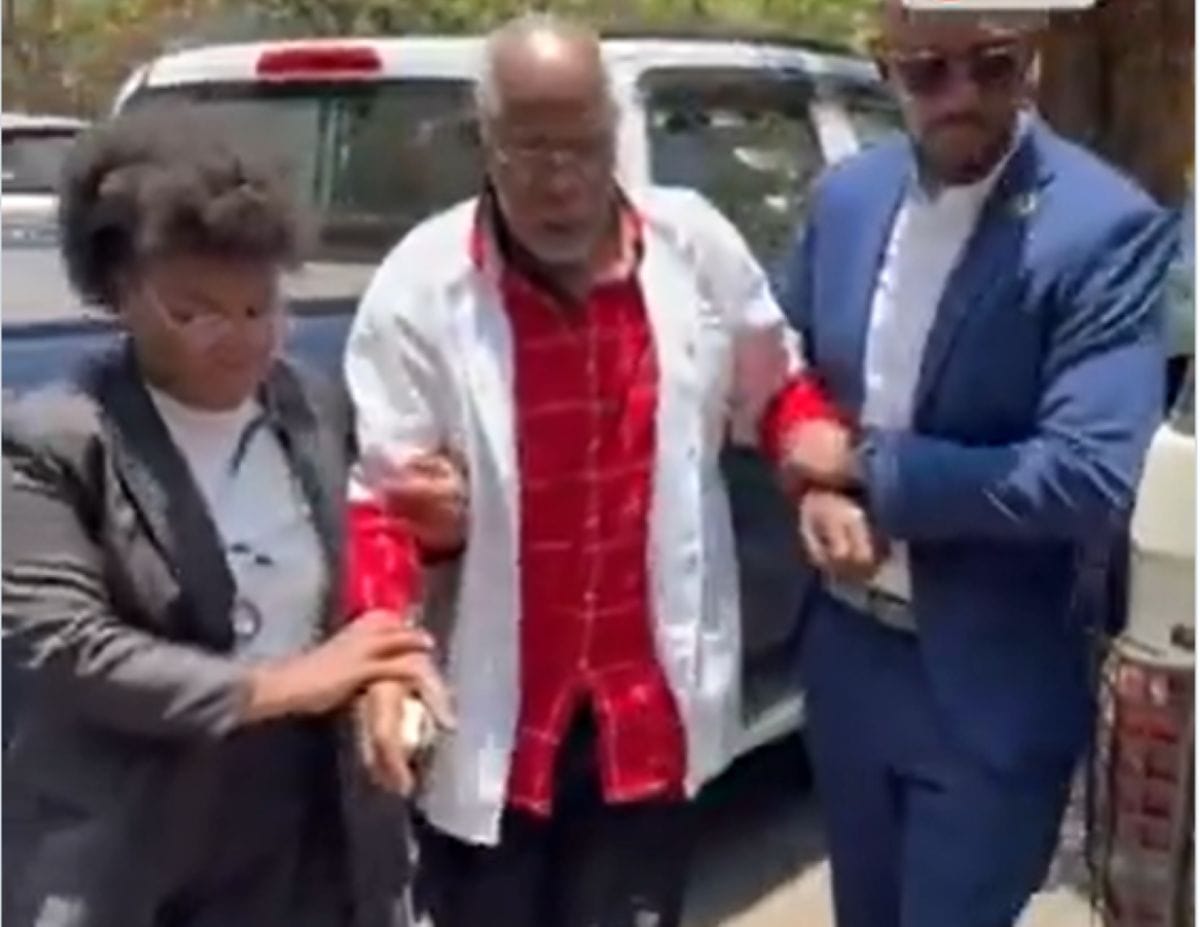
Nairobi Hospital Director falls ill in court after arrest, and the scene inside the Milimani Law Courts yesterday turned chaotic when 83-year-old Dr Job Obwaka suddenly developed breathing difficulties and collapsed during proceedings. The veteran medic who has led one of Kenya’s most respected private hospitals for decades was rushed out on a stretcher by paramedics while fellow board members and family watched in visible panic.
Court officials cleared the room briefly as medics worked to stabilise him before he was taken to a nearby hospital for emergency care. Witnesses described the moment as frightening, with some saying the elderly doctor’s face went pale and his hands shook before he slumped forward in his seat.
Dr Obwaka, along with vice-chairman Samson Kinyanjui, Valerie Gaya and Chris Bichage, has remained in custody since March 14, facing no formal charges yet.
The four were picked up by police in connection with what authorities call an ongoing investigation into governance matters at Nairobi Hospital. Sources close to the Kenya Hospital Association say the arrests tie directly to resistance against attempts to change the hospital’s structure from a company limited by guarantee to a limited liability company.
That shift would allow outside investors to buy shares and potentially take board seats. Several people familiar with the situation claim close associates of President William Ruto have pushed for exactly those changes and have even floated the idea of the president or his allies acquiring the hospital outright after earlier buyout offers were turned down.
The Kenya Medical Practitioners Union has called the detentions unlawful and accused police of ignoring a court order for release. Union officials say the four men were summoned to Harambee House on March 9, where state officials allegedly demanded board reshuffles using the president’s name as pressure.
When the board refused, the arrests followed days later. The union has threatened nationwide protests if the men stay locked up much longer, and doctors in public and private facilities are already discussing coordinated action.
Many in the medical community view the situation as an attack on doctor-owned institutions and worry that government control could shift priorities away from affordable care toward profit.
Dr Obwaka’s health scare yesterday added urgency to those calls. At 83, he has spent most of his career serving the hospital, first as a clinician and then as an administrator.
Colleagues describe him as a quiet, principled man who always put patients and staff first. Seeing him struggle in custody shocked those present and sparked immediate concern about the conditions the group has endured since Friday.
Family members were allowed brief visits afterward, but details of his condition remain limited, with doctors saying he needs monitoring for heart and respiratory issues that worsened under stress. The incident has drawn sharp criticism from human rights groups who argue elderly detainees in non-violent matters should receive special consideration.
Nairobi Hospital itself continues operating normally under acting leadership, but staff say morale has taken a hit. The facility handles complex cases from across the region and trains many young doctors, so any instability at the top raises real worries about patient care and future direction.
The Kenya Hospital Association, which represents over three thousand doctor-owners, has issued statements calling for the immediate release of the four and an end to what they call ‘interference’ in their independent governance. They insist the hospital was built by doctors for doctors, and any change must come from within, not from outside pressure.
Public reaction online has been swift and divided. Some Kenyans see the arrests and the reported buyout push as classic power plays where connected individuals eye valuable assets. Others question why a private institution faces such intense scrutiny and wonder if political motives are at work.
The president’s name keeps surfacing in conversations, though no official statement has come from State House confirming or denying involvement. The silence from government offices has only fed speculation, with people asking why police have held the men for days without charges and why a court release order appears ignored.
The health scare has shifted some of the focus toward humanitarian concerns. Medical unions and civil society groups are now demanding independent medical checks for all four detainees, especially given Dr Obwaka’s age and the stress of prolonged custody.
Lawyers for the group say they will push for bail or unconditional release in the coming days while preparing to challenge the entire process in higher courts if needed.
For now the situation remains tense. Nairobi Hospital keeps treating patients; the board members remain detained, and Dr Obwaka’s condition serves as a stark reminder of how quickly things can escalate when powerful interests clash with independent institutions.
The coming days will show whether the arrests lead to charges, a quiet release or more protests from doctors who feel their hospital and their profession are under threat.
Kenyans watch closely because what happens to Nairobi Hospital could set the tone for how private doctor-led organisations survive in a changing environment. The mix of health drama, custody questions and ownership battles has turned this into a story that refuses to fade quietly.
Related Posts

Paul Mburu Muthumbi, Mbukinya Founder, Dies, Leaving Legacy
Paul Mburu Muthumbi built Mbukinya into one of the longest-running public service vehicle companies through sheer grit before he passed away recently. The Limuru entrepreneur…

Businesswoman Demands Justice After Mitumba Military Bale Scam
A woman paid Ksh 48,000 for a bale of mitumba, just a standard bale of second-hand clothes, yet sellers delivered military uniforms from overseas instead.…

Lumumba Vea Signs Rexona Deal at 2026 World Cup
Congolese superfan Lumumba Vea signs Rexona deals with the 2026 World Cup in Mexico after his motionless tribute pose captured global attention. The passionate supporter…

Doky Dorcas Sets New Guinness Record for Fastest Chapatis
Doky Dorcas claimed the title for the fastest chapatis when she whipped up three fresh ones in record time at Ongata Rongai on December 15,…