
Ruto Orders Foreign Hawkers Out of Kenya Next Week

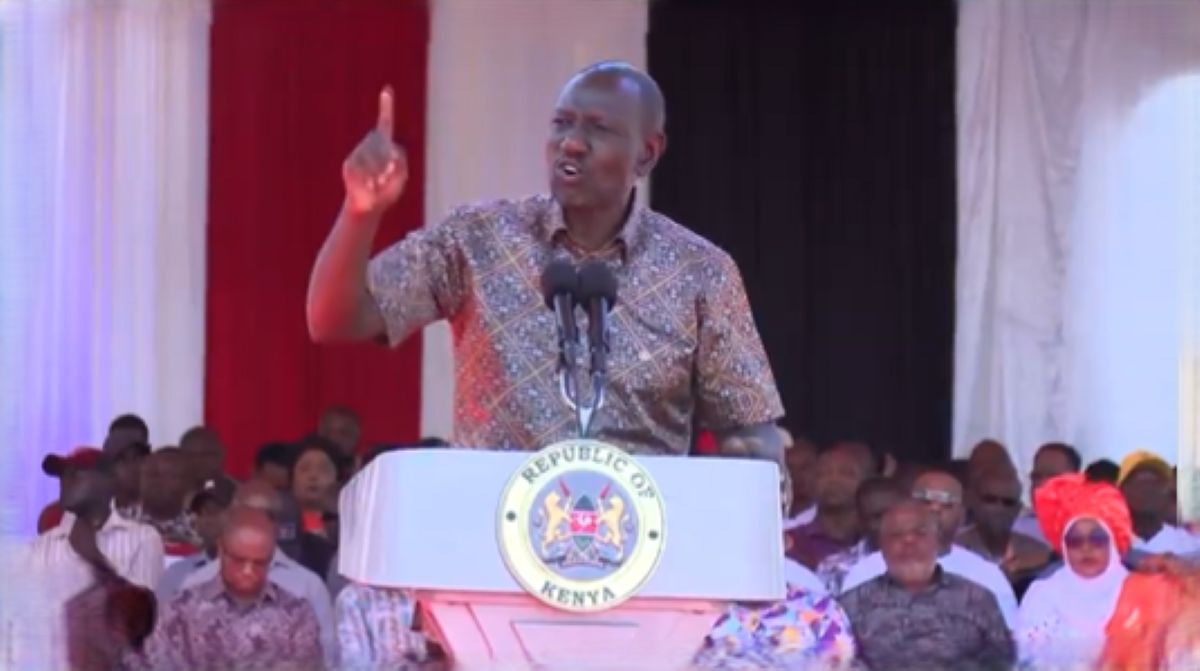
President William Ruto has ordered foreign hawkers to leave Kenya, delivering the warning during a recent address as he defended local traders in Kenya against growing competition, saying foreign nationals should invest rather than sell goods on Kenyan streets and markets, with the directive expected to take effect next week.
Why is Ruto banning foreign hawkers in Kenya?
Ruto says foreign hawkers are taking customers away from Kenyan traders and should leave the informal trading space.
The president delivered the message in unusually blunt language, drawing a sharp line between foreign investors and people who come to Kenya to sell goods on the streets.
“Huwezi toka nchi yako ukuje kukua hawker hapa Kenya,” Ruto said.
“I do not want to see foreign hawkers at all here in Kenya from next week,” he said.
The order places informal trade at the centre of a wider argument over who should benefit from Kenya’s growing consumer market.
Ruto continued with an instruction aimed directly at foreign traders.
“Close your businesses and go back to your countries,” he said.
The president then drew a distinction between foreign business activity that brings investment into the country and small-scale street trading.
“The only foreign people allowed in Kenya are foreign investors, not hawkers,” Ruto said.
His comments will likely attract close attention from foreign nationals who operate small shops, roadside stalls, and other informal businesses across Kenyan towns and cities.
The issue also touches ordinary Kenyan traders who depend on daily sales to pay rent, buy food, and support their families. For many of them, competition can feel immediate. A customer who buys from one stall does not buy from another.
That pressure becomes especially visible in busy commercial areas.
What did Ruto say about Kenyan traders?
Ruto said foreign hawkers are causing Kenyan hawkers to lose access to customers and markets.
“Mnafanya hawkers wa Kenya wanakosa market,” he said.
He followed the statement with an even stronger warning.
“I do not want to see you at all.”
The remarks have placed foreign hawkers under renewed scrutiny as the government faces pressure to protect opportunities for Kenyan workers and small businesses.
For a trader who earns money one customer at a time, the question goes beyond nationality. It comes down to survival.
A slow afternoon can hurt. A bad week hurts more.
Kenya has a large informal economy, with millions of people relying on small-scale trade and self-employment. Street vending remains one of the most visible parts of that system, particularly in major urban centres where traders serve customers looking for cheaper goods and convenient shopping.
Ruto’s comments suggest the government wants foreign nationals to participate in Kenya’s economy primarily through investment rather than informal retail activity.
The president specifically said the change should begin next week, giving the statement an immediate deadline rather than presenting it as a distant policy proposal.
Questions will now centre on how authorities intend to enforce the order, which categories of foreign traders will face action, and whether existing businesses will receive any transition period.
Those details matter.
A broad directive can sound simple from a podium, but enforcement on the ground involves immigration officials, county authorities, police officers, market administrators, and business regulators.
It also raises questions about traders who hold valid permits or operate registered businesses.
For Kenyan hawkers, however, the message from the president was unmistakable. He wants the country’s informal trading space to give local traders more room to earn.
Ruto’s warning also comes at a time when the cost of living continues to shape household decisions. Shoppers often chase low prices, while traders search for affordable suppliers and reliable customers.
Related Posts
Ruto Orders Foreign Hawkers Out of Kenya Next Week
President William Ruto has ordered foreign hawkers to leave Kenya, delivering the warning during a recent address as he defended local traders in Kenya against…
Singer Guardian Angel Starts Mabati Houses Silver Apartments
Kenyan gospel musician Audiphaxad Peter Omwaka, known as Guardian Angel, has begun raising fifteen iron sheet homes on a plot outside Nairobi in late August…

Rwanda Hold Officers On Mini Skirt Crackdown Bus Park Arrest
Police in Rwanda recently detained several officers who forcibly took a young woman into custody for her clothing choice at a public transport hub. The…

Old uniform gets dirty quickly! Spokesperson Charles Owino Justifies Billions Spent on…
Government Spokesperson Charles Owino stood firm in Nairobi as he explained the decision to allocate funds for new police uniforms across the country in 2026.…